

How can we make every attendee feel welcome?
Event organizers spend months perfecting logistics, speakers, and sponsors — yet accessibility often lags behind. Inclusive design isn’t just about compliance; it’s about connection. It ensures that every attendee, regardless of ability, can participate fully.
At Yapp, we’ve seen how mobile apps for events can close the accessibility gap. A thoughtfully designed app allows attendees to read, listen, and engage in ways that work best for them. Whether someone relies on a screen reader, prefers larger text, or needs clear visual contrast, accessibility features create a smoother experience for everyone.
Yapp’s platform empowers event teams to build with inclusion in mind. Our mobile event templates are designed for usability — large readable fonts, accessible navigation, and clean layouts that make interaction simple. Accessibility isn’t an afterthought; it’s built into the foundation of how our customers create and manage their event apps.
Inclusive design isn’t just good practice — it’s good business. It shows your attendees that you’ve thought about their experience from every angle. And when you design inclusively, engagement naturally rises.
Learn how mobile apps for events can help you build experiences that are open and welcoming to everyone.
Why does inclusion in event tech matter?
Events are living communities. They thrive when people feel seen, heard, and accommodated. According to the CDC, one in four adults in the U.S. lives with a disability. That means accessibility is not niche — it’s essential. When event technology fails to meet inclusive standards, you risk excluding a significant portion of your audience.
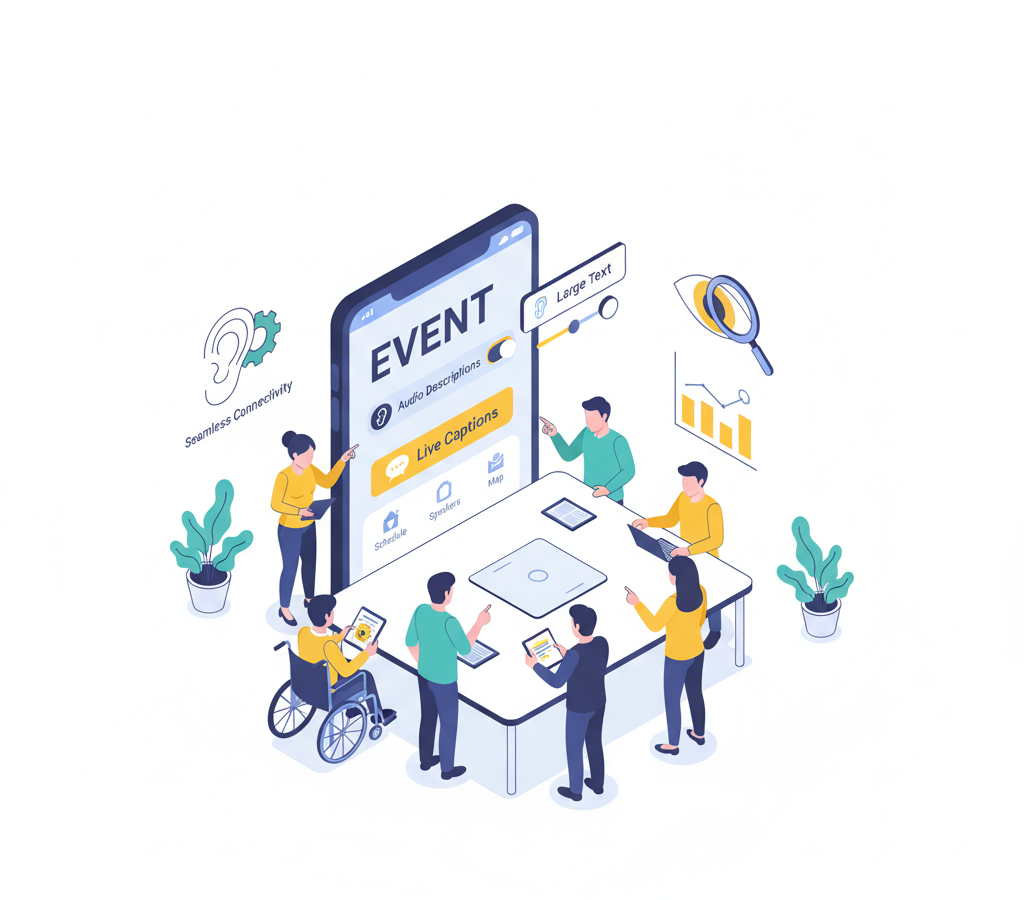
Digital accessibility makes participation seamless. Readable typography helps those with low vision, captions support attendees with hearing differences, and simplified navigation improves usability for all. Accessible features don’t slow an event down — they speed it up by reducing confusion and empowering attendees to act independently.
Yapp’s customers have demonstrated this in practice. Schools That Can, a nonprofit that brings together education leaders nationwide, used Yapp to streamline communication during its National Forum. Push notifications and simplified navigation made it easy for participants to find schedules, speaker bios, and updates. Nearly all attendees reported that logistics ran smoothly, proving that accessibility and organization go hand-in-hand.
Accessibility also enhances engagement. Attendees who can navigate the app independently are more likely to participate, share content, and return for future events.
What features make event apps inclusive?


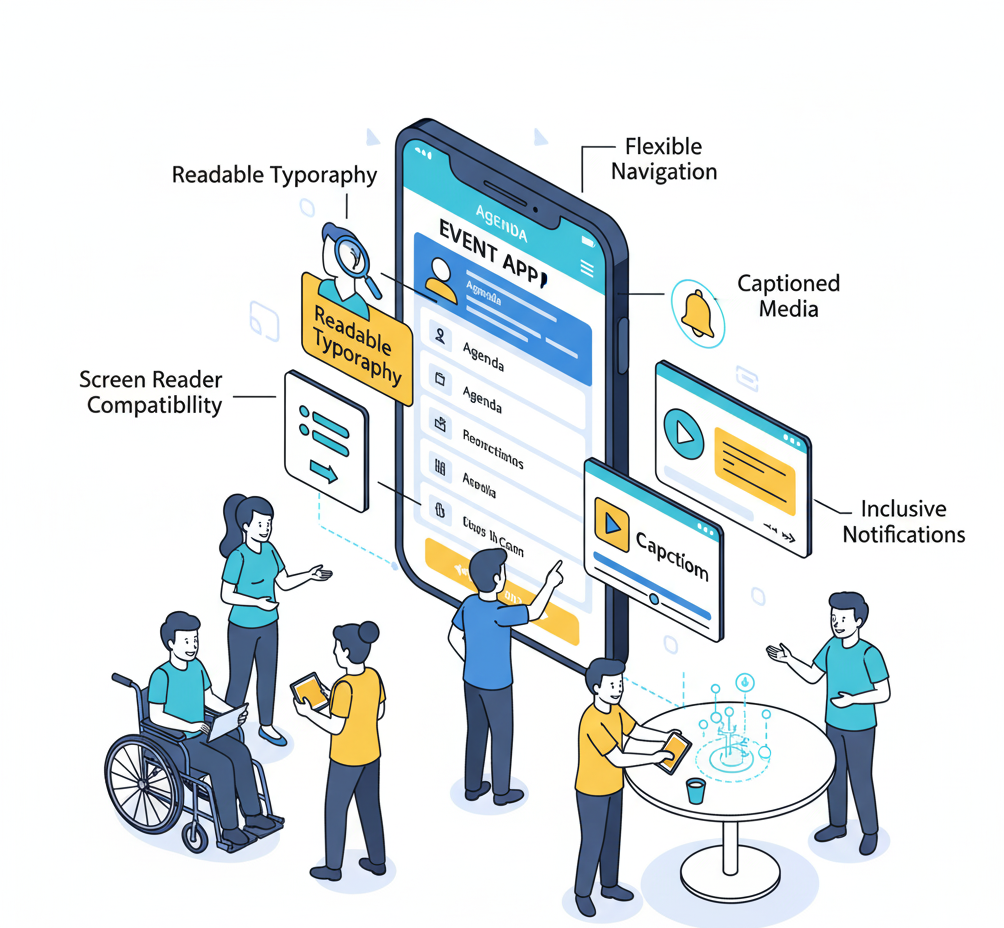
Inclusive mobile apps for events focus on universal usability. These design principles make every experience more comfortable and accessible — regardless of age, ability, or device preference.
- Readable typography: Adjustable text sizes and high-contrast colors ensure visibility in all lighting conditions.
- Screen reader compatibility: Clear, labeled navigation enables users who rely on voice assistants to move easily between sections.
- Flexible navigation: Multiple interaction options — taps, swipes, or menu buttons — support users with mobility or dexterity differences.
- Captioned media: Including captions or transcripts on videos ensures no attendee misses important content.
- Inclusive notifications: Push notifications and alerts reach all users equally, even if they can’t view visual banners.
Yapp’s customers have implemented many of these practices successfully. The team at Uncubed, for example, created centralized, accessible event hubs for more than 5,000 attendees across multiple cities. By switching to Yapp, they saved over $100,000 annually and gave attendees a single, inclusive space to receive updates and view information.
Similarly, Verizon used Yapp to enhance internal training events for up to 600 employees. Their team leveraged features like schedule notifications and photo sharing to improve participation. Accessibility-friendly layouts made content easy to follow, regardless of experience level.
These examples show that inclusive apps not only improve access but also cut costs and increase engagement. When technology supports everyone equally, the entire event benefits.
How can organizers put inclusion into action?
Building accessibility into your event app doesn’t require specialized coding or expensive design. It starts with a few practical steps that any team can implement.
- Adopt accessibility standards. Follow WCAG (Web Content Accessibility Guidelines) to ensure compliance and usability.
- Test with diverse users. Invite people with varying abilities to review your app before launch.
- Simplify design elements. Limit clutter, use clear icons, and maintain logical flow between pages.
- Track engagement data. Identify which pages or features attendees use most to spot accessibility barriers.
- Promote inclusivity openly. Communicate your event’s accessibility features in marketing materials and announcements.
At Yapp, we’ve found that accessibility improves more than usability — it boosts confidence among organizers. Teams gain peace of mind knowing that all attendees can fully participate, whether they’re viewing content on-site or joining virtually.
With Yapp’s event app builder, teams can create apps that are inclusive from the start. Features like flexible page layouts, readable fonts, and customizable navigation make it easy to align with accessibility standards. Organizers can publish updates instantly, ensuring that everyone — no matter how they engage — stays informed.
Inclusion isn’t a one-time initiative; it’s a continuous improvement mindset. Every event offers new chances to learn from feedback and expand accessibility. By making inclusivity a design habit, not a late-stage correction, organizers future-proof their events for broader participation.
When accessibility becomes part of the planning process, your event transforms from functional to meaningful. You’re not just hosting a program — you’re creating a shared experience where everyone belongs. That’s what inclusive technology makes possible.
Ready to make your next event better? Start your trial now!