

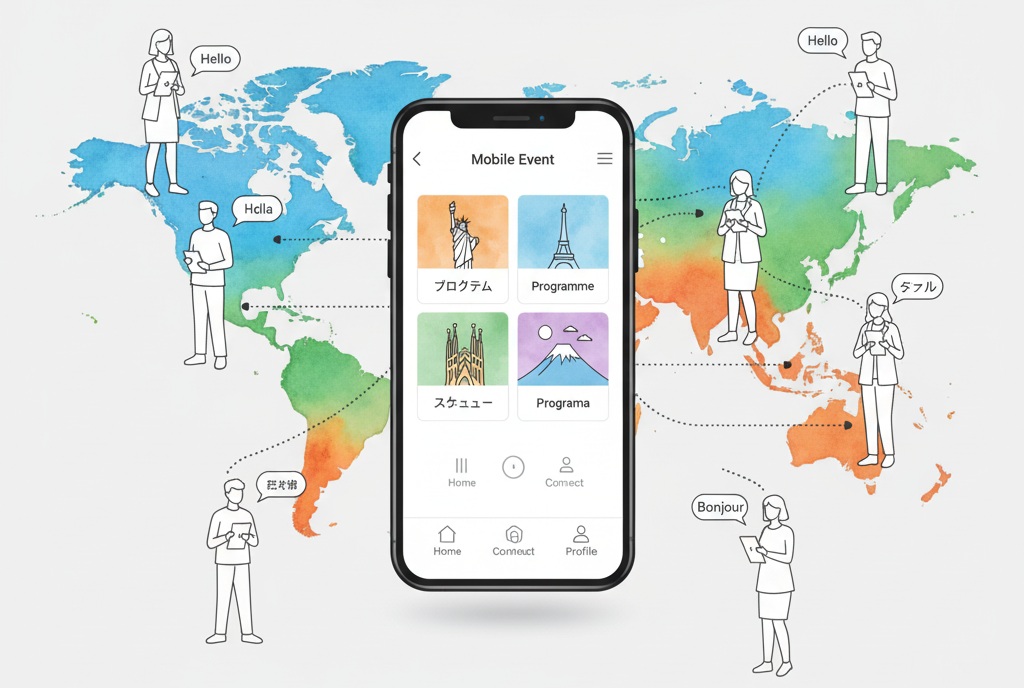
Global audiences bring energy, diversity, and new connections — but they also bring language and cultural barriers. Whether you’re hosting a multi-city conference or a hybrid training series, mobile apps for events can bridge those gaps when localized the right way. It’s not just about translation. It’s about creating a shared experience that feels familiar to everyone.
Explore how easy it is to build and localize an app with Yapp.
Why should global events go local?
When attendees see content in their language, they engage more deeply. They understand the schedule, connect with other participants, and absorb what your event stands for. Localization — done right — turns an app from a logistical tool into an extension of your event culture.
Localization means more than swapping words. It includes:
- Translating languages and regional slang
- Adjusting visuals, icons, and symbols
- Tailoring notifications and time zones
- Adapting navigation and mobile UX
- Highlighting region-specific sessions or sponsors
We’ve seen this firsthand with Yapp customers. When Uncubed moved their multi-city conference series onto Yapp, they reached over 5,000 attendees across Los Angeles, San Francisco, Chicago, and New York. Each city received a localized version of the event app, giving attendees a consistent yet regionally relevant experience. They cut more than $100,000 in costs annually by replacing printed materials and complex custom apps with Yapp’s flexible platform.
Localization empowers global reach while keeping event teams nimble. No more waiting weeks to update content or worrying about language-specific changes. Yapp’s no-code platform allows organizers to launch regional versions in minutes.
How do localized mobile apps for events work in practice?


Localization starts before your first attendee downloads the app. It begins with design choices that reflect inclusion, clarity, and cultural respect.
Here’s what great localized apps do differently:
- Multilingual menus and content: Attendees view schedules, bios, and announcements in their preferred language.
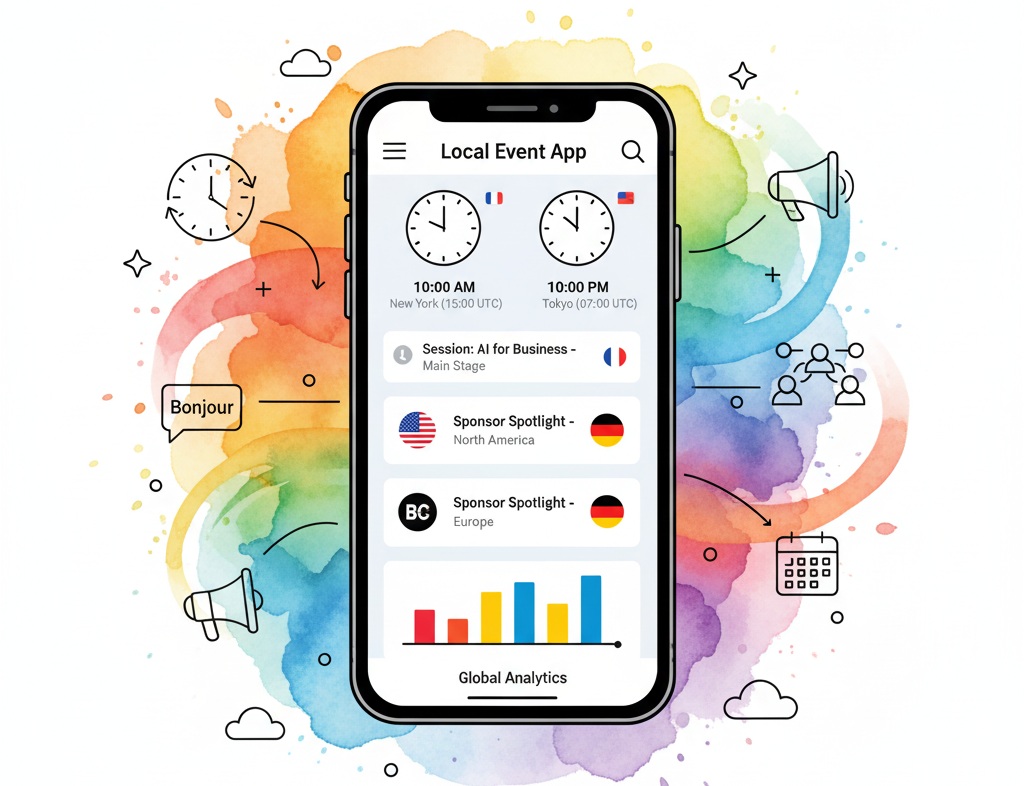
- Dynamic time zones: The app adjusts automatically, ensuring sessions appear correctly for global participants.
- Region-based notifications: Push announcements are scheduled per audience group, reducing confusion.
- Localized sponsor content: Sponsors and partners connect better with attendees when messages align with regional context.
- Unified global analytics: Organizers maintain one dashboard tracking engagement across every localized version.
Educational nonprofit Schools That Can used Yapp to streamline its national forum, which brought together school leaders from across the U.S. The team replaced scattered spreadsheets with one centralized app containing schedules, maps, and speaker bios. They saved 2,700 sheets of paper and achieved a 66% adoption rate among attendees, with real-time updates ensuring smooth communication.
These results underline a key principle: localization strengthens organization. It ensures that each audience segment experiences the same event with content tailored to their needs — a balance between global brand identity and local authenticity.
What does a localized event app deliver for attendees and organizers?
Let’s break down the biggest wins from multilingual, geo-aware mobile apps for events:
- Better engagement: Multilingual notifications reach everyone instantly, improving participation.
- Stronger networking: Region-specific directories let attendees connect with local contacts faster.
- Sponsorship lift: Localized ads and banners drive higher click-through rates and ROI.
- Operational efficiency: Teams reuse one global template for every region, saving hours on setup.
- Reduced costs: Organizers avoid printing multiple language versions or hiring on-site translators.
Enterprise brands like Verizon have applied this same logic to internal conferences and training events. Instead of developing separate regional apps, Verizon teams built multiple versions of one Yapp template for their events nationwide. They streamlined communication, cut costs, and improved engagement across departments.
This flexible approach allows companies to stay consistent with their brand messaging while respecting cultural differences and regional preferences. A training event in California can highlight regional initiatives, while the same app template in New York might focus on different speakers or resources — all within the same unified structure.
At Yapp, we see localization as both a strategic advantage and an attendee expectation. When event technology reflects local context, it signals care and inclusivity. It tells attendees, “You belong here.”
What’s next for localized event technology?
The future of global event apps lies in automation and personalization. Emerging technology will enable real-time translation, location-based content delivery, and adaptive layouts that shift automatically based on user data.
Imagine an app that recognizes where a user is logging in from, switches languages, updates schedules to their time zone, and even displays local sponsor promotions — all without manual setup. That’s where event technology is heading, and Yapp is already building toward that vision.
Our team is testing new tools to help event organizers manage hundreds of localized versions of one global event app. These enhancements will help brands grow internationally without adding complexity or cost. As the line between in-person and virtual events continues to blur, localization becomes the key to maintaining human connection in digital spaces.
A single event can have hundreds of micro-audiences — speakers, sponsors, attendees, staff — spread across different geographies. Localization brings them all together under one cohesive experience. When each participant feels seen and supported in their language and context, the event becomes more than a gathering. It becomes a global conversation.
For event organizers, that’s the real power of localization — scaling connection without losing personalization.
Ready to make your next event better? Start your trial now!