Yapp explains MICA in a simple way as part of its tech explainer series.
The post makes a less familiar technology topic easier to understand for general readers.
Readers who enjoy quick introductions to new tech terms will benefit most from this article.
MICA,n;
My Intelligent Communication Accessory; a smart cuff designed by Intel and Opening Ceremony as a high-fashion tech accessory for women. The tech and fashion brands combined to bring women an attractive solution to the clunky smartwatch market.
Yapp explains Oculus Rift and why virtual reality was becoming such a major tech topic.
The post gives readers a quick introduction to VR in a friendly, accessible style.
Readers interested in gaming and immersive technology will benefit most from this explainer.
A newly-crowned Crunchie winner and fan-favorite at last month’s Consumer Electronics Show, the Oculus Rift is about to get even more hype.
Oculus Rift, noun; A head-mounted display for games developed for virtual reality. In short, you can live-play video games with the headset. Though it isn’t available for consumers just yet, the Rift headset will be among the first virtual reality headset available for gamers to use in-home. Like Google Glass, the Rift will run on apps, though most will be games versus Glass’ more personal-assistant based model.
Oculus Rift started as a Kickstarter project in 2012, where they raised close to $2.5 million dollars — ten times their $250,000 goal, which was reached within 4 hours. The prototyped Oculus Rift premiered at the Consumer Electronics Show last month, featuring an OLED display and a motion tracking system to immerse the wearer in the game. Each game being developed for the Rift uses the technology to its specific needs, but all start with the first-person experience; the wearer immediately becomes a part of the game, rather than the controller separated by however-many feet of space between the seat and the screen.
Though games are the focal concept for developers working on Oculus Rift, this Mashable review points out the possibilities of the Rift headset as a second-screen for experiencing media, a virtual experience for medical students, and a tool for virtual reality immersion therapy patients. It was used recently as a part of HBO’s traveling “Game of Thrones: The Exhibition” to put visitors into the world of the hit show.
There isn’t a definite release date on the consumer version of the Oculus Rift headset, but it’s estimated to be within the next year.
UPDATE: Facebook purchased Oculus, the company that created the virtual-reality Rift headset, for $2 billion on March 25, 2014. It’s currently unclear about the deliverability of the product that was backed on Kickstarter, but we can be sure that Facebook will take the Rift in a direction that is likely not what most backers were hoping for. Mark Zuckerberg, Facebook’s CEO, plans to use Rift technology for “communications, media and other forms of entertainment,” a pretty broad and super vague classification. (We imagine this means virtual reality advertisements, and maybe a modern, immersive version of Farmville?) Maybe Facebook hasn’t quite figured it out yet, which has caused many of the more than 75,000 developers who ordered devices to create games and software to express their frustration at their money invested. Because the device was originally funded on Kickstarter, there are a lot of questions and concerns over the acquisition.
Yapp explains OLED technology in a simple, readable format.
The post helps readers understand why display quality and screen innovation matter in consumer tech.
Readers interested in smartphone and display technology will benefit most from this explainer.
If you just figured out the difference between the curvy light bulbs and the old ones, let us introduce you to something completely new.
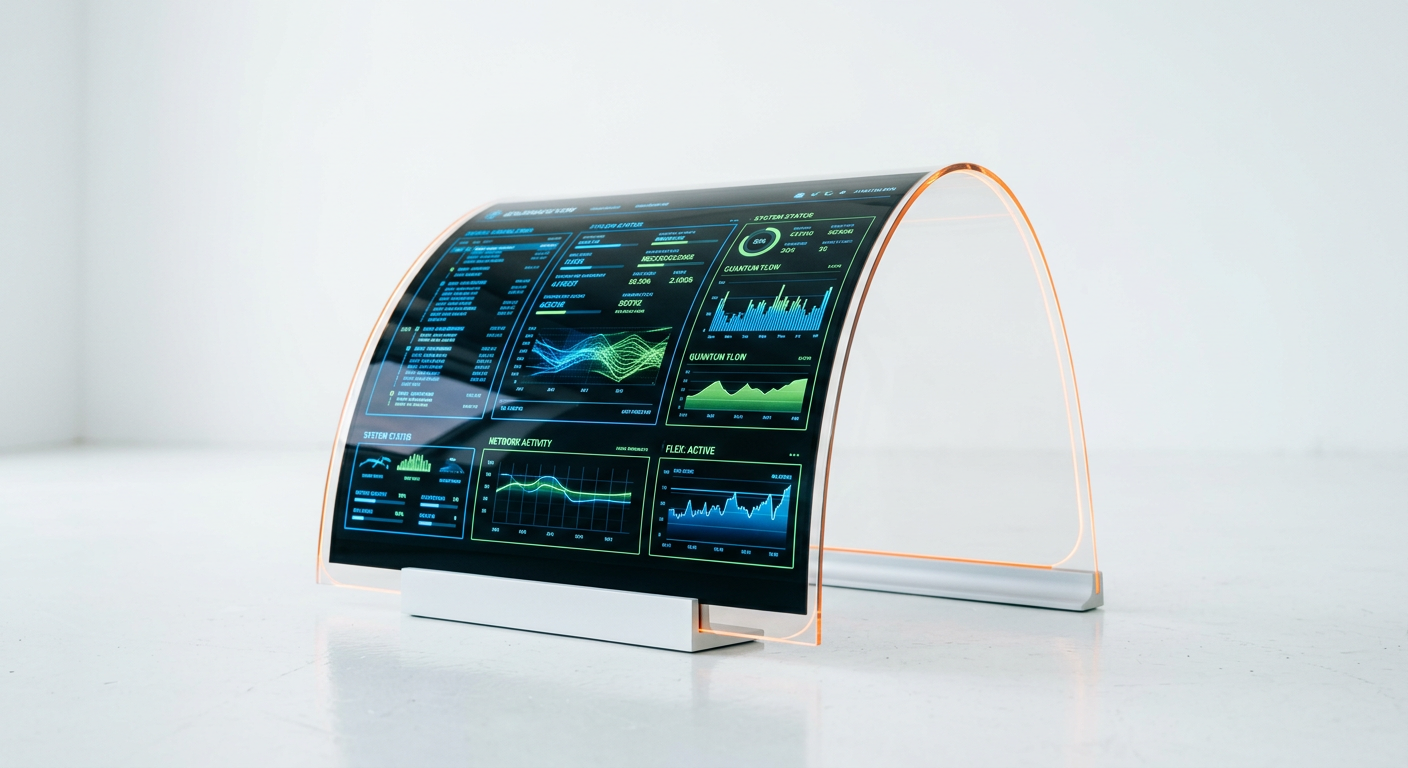
OLED, n; A reemerging style of lightweight light technology used to create digital displays. In long form, OLED is an “organic light-emitting diode,” and if you followed last week’s Consumer Electronics Show, you probably heard about it. OLED is the digital lighting style that has given way to bendable or curved screens. Remember Samsung’s Galaxy Round? (Probably not.) It was the first curved smartphone, created with an OLED display. LG followed with another curved phone, neither of which really took off. But at CES, LG announced a line of flexible televisions that curve theatrically with the touch of a button.
All of these gadgets are no doubt cool, but what’s the benefit of creating with OLED? It goes beyond literal flexibility; you can use OLED to create light-emitting clothing (like Philips did for the Black Eyed Peas) and transportable displays that EMTs, vets, and other on-site workers can use. OLED is so light that is can be incorporated into glass, which opens the door to a totally connected lifestyle, a la Minority Report. Corning, the glassware creator, created this video in 2011, showing a smart home in which everything is connected by technologies like OLED embedded in glass.
Though still in its infancy, OLED is already growing popular among hardware creators. Creators from Samsung to Philips to Corning believe that OLED’s flexibility will lead to more multifaceted and less breakable devices.