Category Archives: Mobile Technology

What the Tech?! Lytro’s Illum Camera

Quick Summary

  • Yapp explains the Lytro Illum camera and why it stood out in imaging technology.
  • The post gives readers a quick, accessible look at a unique camera innovation.
  • Readers interested in photography tech and gadget trends will benefit most from this article.


Illum


Lytro Illum, n;
A mirrorless camera that can refocus photos after they’re taken. The Illum is built using a light field sensor, which captures direction of light rays in addition to the basic color and intensity of traditional cameras. This allows the camera to render photos into focus after the image has been captured. It can also created 3D images or graphical animations as used in virtual reality.

The Illum is Lytro’s second attempt to expose the world to light field technology; in 2012, it released a point-and-shoot camera that didn’t catch on. Lytro’s mission as they bring Illum to the market is to change the way people think about images. The Illum is built with very little glass and no mirror — this basically means it isn’t a camera, in the traditional sense. Instead, it’s a computer-like collector of data that later creates images from the information it gathers when you hit the “shutter” button. This data is sent to a companion app, where you can refocus, shift, and create variations on one shot. Needless to say, this camera isn’t built for selfies.

The camera will run an expensive $1,500 to purchase, but the hardware is only the first step in what Lytro wants to do with the technology built into Illum (so, it’s okay to hold off for now). The team behind the light field camera wants to install the technology into “anything with a lens and a sensor,” creating instantly interactive images of security cameras or MRIs, for example. They also imagine a cheaper Hollywood, where instead of shooting with 5 cameras in expensive 3D, a filmmaker can shoot with one and choose focus later. Someday, the technology built into the Illum will probably grace our tablets and smartphones, putting professional digital photography tools into the palm of an amateur hand.

Play around with images from the Lytro Illum within this in-depth review from The Verge.
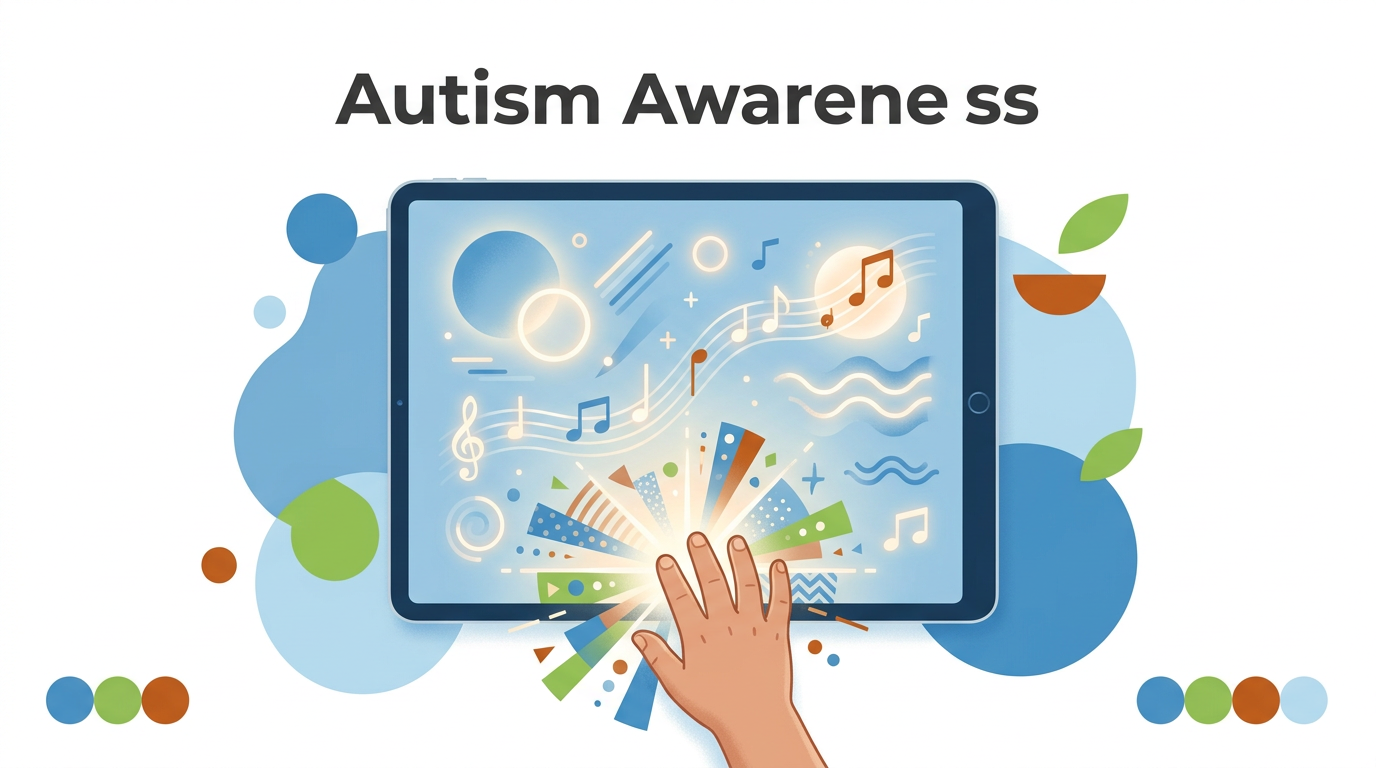
Celebrating Autism Awareness: ReacTickles Magic

Quick Summary

  • Yapp highlights Reactickles Magic as part of Autism Awareness content featuring meaningful apps and tools.
  • The post shows how mobile technology can support communication, learning, and engagement in creative ways.
  • Readers looking for autism-related app inspiration will benefit most from this feature.

April is Autism Awareness Month and we’re featuring an app each week that is loved by and influential in the Autism community. This week, take a look at ReacTickles Magic, an interactive software designed with children on the Autism Spectrum.

ReacTickles Magic


Continue reading →

What the Tech?! OpenSSL

Quick Summary

  • Yapp explains OpenSSL and why it matters in the broader internet security landscape.
  • The post helps readers understand an important technical term in a simpler, more accessible way.
  • Readers interested in online security and major tech infrastructure topics will benefit most from this explainer.

heartbleedOpenSSL, noun;
The most popular open-source library used to implement secure encryptions for websites, e-mail servers and applications. SSL stands for ‘Secure Sockets Layer’, and OpenSSL simply means that anyone with the means can contribute to

You’ve likely heard a lot about OpenSSL lately because of Heartbleed, the security issue that was reported last week. And you’ve probably been told to change your password on every site you care about (if you haven’t, you should). An error was added into the OpenSSL code that allowed anyone who knew how to read chunks of memory and retrieve extensive security information (like passwords and cookies) that are usually protected by encryption. The vulnerability affected about 500,000 secure sites running OpenSSL, which is about 66% of the Internet.

The bug (called Heartbleed because it occurred in the heartbeat extension within the code base) was present for two years before being discovered and patched last week. If you’re running Android on your mobile phone, you can use the Heartbleed Detector app to tell if your information has been compromised. Apple doesn’t use OpenSSL on any of it’s operating systems.

Now that you’ve got a grip on the news story, go change your passwords.


Celebrating Autism Awareness: Proloquo2Go

Quick Summary

  • Yapp highlights Proloquo2Go during Autism Awareness Month as an example of technology with real impact.
  • The post shows how communication apps can support accessibility and inclusion in meaningful ways.
  • Readers exploring autism-related communication tools will benefit most from this feature.

April is Autism Awareness Month, and we’re featuring an app a week that is loved by and influential in the Autism community. This week, we’re showing off Proloquo2Go, an award-winning speech assistance program.

Proloquo2Go Continue reading →

What the Tech?! Multi-hop Mesh Networking

  • Yapp explains multi-hop mesh networking in a way that is easier for general readers to follow.
  • The post turns a complex networking concept into a practical tech explainer.
  • Readers interested in connectivity and future internet infrastructure will benefit most from this article.
Multi-hop Mesh Networking

Never heard of it? It’s all around.

Multi-hop Mesh Networking, v;
Using connected devices within range of each other to create a network of connections to the Internet. A mesh network is a web of linked devices working together to provide the least expensive and strongest connection to the Internet. Basically, it is made up of nodes (like your smartphones, tablets and computers) that distribute data to and through one another to get to the Internet via the most stable route possible.

Recently, the app Open Garden — which has previously been able to achieve linking your various devices to a small, personal network — has expanded to the “multi-hop” part of the mesh networking world; this means linking your smartphone to your neighbors tablet and his or her neighbors smartphone to get the best possible connection to the Web. By using mesh networking and sharing data, users of the app create a crowdsourced network that can support connections at gatherings. If it becomes a popular enough practice, it could be used at conferences, farmers’ markets, festivals, and plenty more events to offer an inexpensive solution to wireless connectivity.

Right now, apps like Open Garden aren’t used en masse, which makes the network weaker. Once it (and possibly other apps that catch on) further penetrate the connected market, it’s possible that data and connection sharing will be become a more widespread way to access wireless Internet.

Autism Awareness Month

Celebrating Autism Awareness with Apps

Autism Awareness Month
  • Yapp highlights apps connected to Autism Awareness Day and Month to spotlight technology that supports communication and inclusion.
  • The post shows how apps can play a helpful role in awareness and everyday support.
  • Readers looking for autism-focused app ideas and awareness content will benefit most from this roundup.

April 2 is World Autism Awareness Day, kicking off a month of Autism awareness. We changed our blog header for the month to show our support for the Autism community with a Yapp-colored puzzle piece, and are planning a month-long series of featured apps that help those with Autism spectrum disorders overcome some of the challenges they face.

Today, we’re checking out Toca Band, which has gone free for World Autism Awareness Day.

Continue reading →

What the Tech?! eyePhone

  • Yapp explains the EyePhone concept in a quick, accessible What the Tech format.
  • The post turns an unusual technology idea into an easy read for general audiences.
  • Readers who enjoy light tech commentary and trend explainers will benefit most from this article.

Virtual reality is the next big trend in phones.

Virtual Reality PhoneseyePhone*, n;
An experimental device that melds virtual reality headsets with the technology you love on your phone. Instead of carrying around a lightweight phone, the eyePhone will fit heavily around your head similar to the Oculus Rift headset. When you turn on the eyePhone, you’ll see a screen about the size of a modern smartphone floating in front of you. It’s slightly transparent to keep you from running into trees, and no one else can see the screen before you. The phone will perform all the basics, including call and text, and hopes to integrate with major mobile applications in the future.

The virtual reality comes in different forms depending on the app. A call starts with a choice of phone: there are retro rotarys, recent push-buttons, and basic touchscreens. Just align your hands with the screen you see in front of you and dial away as if you were really using one of these phones. Rotary is a top choice among hipster beta testers, holding their hands out straight ahead and slowly moving their fingers part of the way through a circle. A few apps are also already integrated, including email, which immerses you in a desolate or overflowing room of envelopes (depending on how you manage your inbox) and is controlled by your thumbs typing in midair,  and Facebook, which reads all of your high school frenemies’ posts as you scroll through your news feed.

The eyePhone will completely eliminate any semblance of stealth phone activity, like texting during class or taking pictures of strangers’ outfits. The creators have plans to make the headset  fold up”thinner than the Motorola Razr” so it will fit in your pocket, but for now, it will hang around your neck like very heavy reading glasses. No timeline yet on a release for the new eyePhone, though developers can get their hands on a headset by tweeting, “Someone, give me an #eyePhone!”

What the Tech?! Nymi

  • Yapp explains Nymi and why biometric identity technology was gaining attention.
  • The post gives readers a simple introduction to a more advanced wearable tech concept.
  • Readers interested in security, biometrics, and wearable technology will benefit most from this explainer.

An ID band that opens doors to, well, everything.

Nymi
Nymi, n;
A new wearable device that uses your heartbeat to verify your identity. Nymi creates a password from your unique cardio signals, which are only a bit less secure than our unique fingerprints. It will enter the market as a remote to your accounts and gadgets that can be controlled only by you. But, that market (your wrist) is already pretty full — you’ve got smartwatches, exercise monitors, regular watches, bracelets, pony tail holders; why make room? Continue reading →

What the Tech?! littleBits

  • Yapp explains littleBits and why modular electronics appealed to makers and learners.
  • The post highlights a creative technology product in a simple, engaging format.
  • Readers interested in educational tech and hands-on innovation will benefit most from this article.

The newly released Internet-connected building blocks are the grown-up’s Legos.

LittleBitslittleBits; n,
Blocks built of tiny circuit boards that snap together like Legos, but using magnets instead of plastic shapes. Each bit is programmed to perform a specific function (like light, sound, motor or sensor) so that, when assembled a particular way, anyone can create electronics. Each block is color-coded for easy connecting. There is an opensource library of modules, and anyone can submit dreamBits on the site for modules they would like to see.

littleBits newest Cloud module, which debuted yesterday at TED, takes the product into the Internet of Things, where hardware can connect with other hardware through an Internet connection. If you wanted to create a DIY version of the Nest thermostat, the Cloud module could help. Testers at littleBits have created an automated fish feeder, too.

Like us at Yapp, littleBits are for anyone — not programming knowledge or wiring skill required. The magnetic modules — whether web connected or not — have tons of cool uses for kids, students, and Maker parents. littleBits’ mission is to create the next-gen Lego set: an awesome toy that can create incredible tools. Users have created everything from flashlights to KORG-backed synthesizers. littleBits kits are available starting at $99, and the Cloud module will be released later this year — what are you going to make?

What the Tech?! CarPlay

  • Yapp explains Apple CarPlay and why it mattered in the evolution of connected devices.
  • The post offers a quick introduction to in-car mobile integration in plain language.
  • Readers interested in Apple and automotive tech trends will benefit most from this explainer.

Apple’s update to iOS 7.1 includes a few great tweaks and one big new leap.

Apple's iOS 7 update includes CarPlay

CarPlay, noun;
An in-car integration with your iOS device. CarPlay software primarily uses a voice command system that lets you take hands-free calls, dictate text messages, and browse through your music library by thinking out loud. It also integrates mapping and will work like a smarter GPS to navigate you to your destination. The new software will be available in a variety of cars to iPhone 5, 5C and 5S users who hook up their phones. Cars that integrate CarPlay will be built with touchscreen displays and controls on the steering wheel to keep the platform as eyes-free as possible. Along with Apple apps like iTunes, Maps, SMS and phone, third-party apps like Spotify and Beats Music are available; that selection is likely to grow as the system is adopted, but only to include apps that can be utilized and controlled by Siri.

CarPlay, while not the perfect solution to non-distracted driving, is a forward-thinking step for a world of smartphone-obsessed commuters. The goal is to minimize time spent looking at the display (or at a phone). Mainly, the system is controlled by communicating with Siri, who will dial, text, and select music via voice command. “She” will also be able to search through emails and text messages for addresses to predict where you’re traveling to and navigate for you, taking out the step of typing in or having to adjust by hand a destination address.

The first cars with CarPlay — models from Ferrari, Mercedes-Benz and Volvo — debuted at the Geneva Motor Show, and future partners will include Nissan, Honda, GM and others. Some older models that have digital displays may be retrofitted to work with CarPlay, as well.