Author Archives: Katie Terrell Hanna

How to Write an Event Brief (Step-by-Step Guide for Event Planners)

  • Yapp explains how to write an event brief that keeps teams aligned on goals, audience, logistics, and execution.
  • A strong brief reduces confusion, speeds up planning, and gives stakeholders one clear source of truth.
  • Event planners, marketers, and internal teams managing complex events should use this step-by-step guide.

If you’re an event planner, you’ve probably asked yourself the same question after every event: “How can I make the next one even better?” The truth is, successful events don’t start with venues or budgets — they start with a well-structured event brief.

An event brief is more than paperwork. It’s your playbook for aligning stakeholders, clarifying objectives, and ensuring every detail is designed to deliver results. Whether you’re planning a conference, a trade show, or an appreciation gala, a strong brief helps you save time, cut costs, and boost attendee engagement.

What is an Event Brief?

An event brief is a document that contains all the essential information about an event. It is a tool that can be used by event planners to ensure that they are on the same page with their clients and to make sure that they are aware of all the essential details that need to be considered when planning an event.

For instance, if you’re planning a conference, you would want to include information about the topics covered and the speakers presenting. This document is a reference for everyone involved in the event’s planning process, from the organizers to the vendors.

Why is an Event Brief Important?

Here are some of the critical benefits of having an event brief:

  • Optimize Tracking: By clearly understanding the event’s goals, you can more accurately measure its success. For instance, if your objective is to generate brand awareness, you want to track metrics like social media engagement and website traffic.
  • Improve Communication: A detailed event brief enables all stakeholders –– from the venue staff to the marketing team –– to be on the same page. This can help prevent misunderstandings and miscommunication.
  • Save Time and Money: By being clear about your event’s goals, you can avoid wasting time and money on unnecessary details. For instance, if you’re planning a small intimate gathering, there’s no need to book a large venue or hire a celebrity MC.

Now that you know the importance of an event brief let’s look at how to write one.

Step-by-Step Guide for Writing an Event Brief

Below are the key steps for writing an event brief.

Step 1: Provide an Event Overview

The first step is to provide a general overview of the event. This should include the name, date, time, and location. It would be best if you also briefly described the event, such as its purpose or theme.

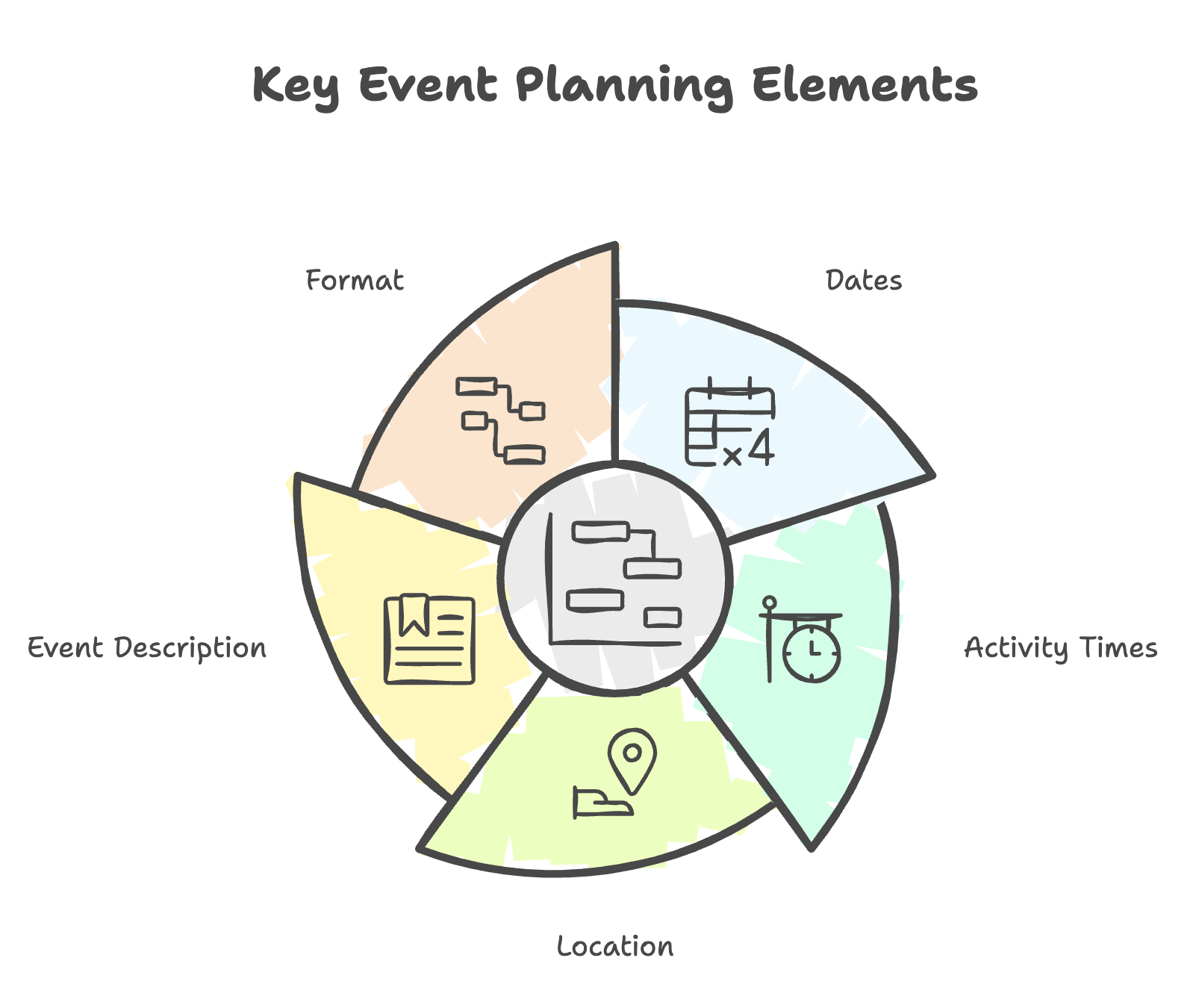
Here is the essential information you’ll need to include in the overview:

  • Event name
  • Dates
  • Activity times
  • Location
  • Event Description
  • Format

Step 2. Define the Objective

Ask yourself, what is the purpose of the event? Is it to generate leads, drive sales, or build brand awareness? Once you’ve identified the main objective, you can start aligning all the other event elements around it.

Define the objective as clearly as possible. Here are some examples:

  • Meet and network with our community of stakeholders, including clients, prospects, and partners.
  • Educate customers on a significant new product launch or brand change.
  • Generate sales for our annual holiday promotion.
  • Acquire new customers in our market.

Step 3. Identify the Target Audience

Who is this event for? Is it for existing customers, new prospects, or partners? The answer to this question will dictate the event’s tone, messaging, and overall experience.

For instance, if you’re planning a conference for C-level executives, you want to ensure the venue is upscale and the topics are relevant to their needs. On the other hand, if you’re planning a customer appreciation event, you want to ensure it’s fun and interactive.

Be as specific as possible when identifying the target audience. Here are some examples:

  • College students who are interested in starting their own business.
  • Working professionals in the industry who are looking for a new job.
  • Stay-at-home parents who are interested in earning an income from home.

Step 4. Set the Tone

What kind of feeling do you want your guests to have when they leave the event? This is what we call the event’s “tone.” The tone should align with the event’s objective and target audience.

For instance, if you’re planning a conference for industry thought-leaders, you would want the tone to be professional and informative. On the other hand, if you’re planning a customer appreciation event, you would want the tone to be fun and festive.

Some examples of event tones include:

  • Intimate and exclusive
  • Fun and festive
  • Professional and informative
  • Luxurious and extravagant

Step 5. Choose the Type of Event

There are many different types of events, but some of the most popular ones include conferences, conventions, trade shows, and exhibitions. Events can also be classified by their size, such as small (under 100 people), medium (100-1,000 people), or large (over 1,000 people).

Here are some examples of event types:

  • Conference: A gathering of people to discuss a particular topic or share information.
  • Convention: A large gathering of people centered around a shared interest, goal, or industry.
  • Trade Show: An event where businesses showcase their products or services to potential customers.
  • Exhibition: A public event where businesses display their goods or services for the first time to generate awareness. 

The type of event will depend on the goals, target audience, and budget. For instance, a trade show might be the best option if you’re trying to generate sales. If you’re trying to build brand awareness, then an exhibition might be the better choice.

Step 6. Choose the Date and Location

The date and location of the event are two of the most important factors to consider. The date should be chosen based on the availability of the venue, the target audience, and the event’s objective. For instance, a date near the holiday season might be the best option if you’re trying to generate sales.

The location should be chosen based on the type of event, the target audience, and the budget. For instance, a city with a strong business presence would be the best choice if you’re planning a conference for industry thought-leaders.

Step 7. Set Roles and Responsibilities for the Team

Now that you have the basics of the event planned, it’s time to start putting together a team to help make it happen. 

Depending on the size and scope of the event, you might need to hire an outside company to help with logistics. You will also need to decide who will be responsible for marketing, budgeting, and customer service tasks.

Many different roles must be filled to successfully plan and execute an event. Here are some of the most important ones:

  • Event planner: The event manager is usually the first point of contact for the client or customer. They are responsible for developing the event concept, setting the budget, and managing the logistics.
  • Event coordinator: The event coordinator works closely with the event planner to ensure that all event details are taken care of. They are responsible for booking the venue, arranging transportation, and ordering supplies.
  • Event marketing manager: The event marketing manager is responsible for promoting the event to the target audience. They develop and implement marketing plans, create promotional materials, and manage social media campaigns.
  • Event sales manager: The event sales manager is responsible for generating revenue for the event. They sell tickets, sponsorships, and exhibitor space.
  • Customer service manager: The customer service manager is responsible for ensuring attendees have a positive experience at the event. They manage customer inquiries, resolve complaints, and provide information about the event.

Depending on the size of your organization and your budget, one person may assume more than one of these roles, or even all of them.

Step 8. Selecting the Right Event Mobile App 

Deciding on the right mobile event app for your event can be daunting. With so many different options on the market, it’s essential to take the time to consider your needs and find an app that will fit both your event and your attendees. Some things to keep in mind include:

  • The app should be easy to use and navigate. Attendees should be able to find the information they need without difficulty.
  • The app should be compatible with multiple devices (IOS and Android). Not everyone uses the same type of phone, so it’s essential to choose an app that as many people can access as possible.
  • The app should offer features that are relevant to your event. For example, if you’re hosting a conference, you’ll want an app that allows attendees to create their own schedule, view speaker bios, and read up on sponsors.
  • The app should be updated regularly. With new versions of iOS and Android released every year, you will need to ensure your app is always up-to-date. Otherwise, attendees may not be able to access it on their latest phone or tablet. By keeping these things in mind, you can be sure to choose the suitable event mobile app for your needs.

Step 9. Create a Minute-by-Minute Update of the Event

This is one of the key ways conference apps streamline event operations and reduce confusion during live events. It should include all the required details, such as the start and end time, the location, the speakers, and the activities.

The schedule should also be updated regularly so that attendees can stay up-to-date on the latest information.

Here is an example of an event schedule:

  • 9:00 am – Registration and Breakfast
  • 10:00 am – Opening Keynote
  • 11:00 am – Breakout Session 1
  • 12:00 pm – Lunch
  • 1:00 pm – Breakout Session 2
  • 2:00 pm – Breakout Session 3
  • 3:00 pm – Breakout Session 4
  • 4:00 pm – Closing Keynote
  • 5:00 pm – Networking Reception
  • 6:00 pm – Event Ends

Step 10. Develop a Marketing Plan

Remember that organizing an event is not just about logistics but promoting it to the right audience. The marketing plan should be developed based on the objectives of the event, the target audience, and the budget.

The marketing plan should include a mix of traditional and digital marketing tactics, such as print advertisements, online ads, email marketing, and social media.

Here are some examples of a marketing plan:

  • Print ads in local newspapers and magazines
  • Online ads on event websites and social media
  • Email marketing to potential attendees and past participants
  • Social media campaigns on Facebook, Twitter, and Instagram
  • Direct mail to potential attendees in the target area

Step 11. Keep an Updated To-Do List

Organizing an event can be a logistical nightmare. There are many details to keep track of, from the venue to the catering and marketing. Keeping an updated to-do list is essential to ensure that nothing is forgotten.

The planning checklist should be updated regularly and shared with the event team, so that everyone is on the same page.

Here is an example of a to-do list:

  • Confirm venue booking
  • Order catering
  • Create event website
  • Print promotional materials
  • Ship event supplies to the venue
  • Coordinate with volunteers
  • Finalize speaker lineup

Organize Your Event and Improve Attendee Engagement with Yapp

Each event comes with its own unique set of challenges. But with the right tools and execution, any event can be a success. This is where Yapp comes in.

With Yapp, you can easily create a custom event app without coding. Attendees can use the app to stay up-to-date on the latest information and interact with other attendees. You can use it to keep everyone up-to-date via push notifications. For larger events, you can even create a second smaller app to be used by your organizing team to coordinate the behind the scenes details and logistics needed to make the event a seamless success!  

Get started with Yapp‘s free trial today to make your next event a success!

7 Reasons Why We Love Mobile Event Apps (and you should, too!)

  • Yapp explains why mobile apps are valuable business tools for events and internal communication.
  • Real-time updates, personalized experiences, centralized information, social connectivity, and future-ready flexibility make apps more effective than scattered tools.
  • Organizations that want stronger event engagement or better employee communication should use this approach.

Mobile event applications have become an integral part of our daily lives.

Be it weather alerts, keeping up with social media, or updates from your favorite ecommerce platforms like Amazon, mobile apps offer an array of benefits, accessible from mobile devices, with the press of a button.

However, mobile apps are also growing in use for business needs such as customer engagement at a conference or event, or keeping your team members updated with features like in-app alerts. 

In this post, we’ll share some of the business use case benefits that make mobile apps indispensable.

The Benefits of Mobile Apps For Business

Here are several reasons why we love mobile event apps and why you should consider Yapp to create your next business app for an event or for employee communication needs.

1. Real-Time News and Updates

Mobile apps, particularly those with push notifications, ensure that you are always connected and updated and greatly improve the employee or customer experience (depending on who’s using your app).

Yapp takes this a step further by allowing you to send unlimited push notificationsto your event attendees or employees, keeping everyone up-to-date and engaged.

2. User Engagement and Personalized Experience

Apps have revolutionized the way we learn and interact. From sharing the upcoming list of speakers to sending critical team updates that empower employees to take action quickly, apps make it possible via their interactive content.

With Yapp, you can create a custom mobile app design (with no coding skills necessary!) that matches your brand or event theme, offering a personalized experience to your users. 

This increases user engagement and customer satisfaction, helping you to build stronger customer relationships or foster greater morale within your team.

3. Everything in One Place

Apps like Yapp aggregate all necessary information in one place, eliminating the need to hunt for content across different platforms, as well as paper waste that comes from printing materials as opposed to digitizing them.

Whether it’s sharing event schedules, uploading documents, sending critical team updates, or maintaining a list of attendees, Yapp’s easy to use editor takes all the complexity out of mobile app development and focuses on streamlining content access and interaction.

4. Location-Based Services

Thanks to GPS technology, apps can offer services based on the user’s location. Apps can harness this capability by allowing users to share locations to find venues or navigate a new area in town, fostering and improving the user experience.

5. Boosting Social Connectivity and Customer Base

Social media has transformed the way we connect. That’s why Yapp integrates social tools into its platform, enabling users to connect, share photos, and interact with others.

This enhances brand awareness and extends your customer base, ultimately driving customer loyalty as part of our overall marketing campaigns or operational improvement goals.

6. Constant Innovation

With new mobile applications appearing every day on app stores like Google Play and iOS App Store, being app-savvy puts you at the forefront of technological advancements.

That’s why at Yapp, we’ve made it our goal to continuously improve, providing new updates, features, and functions to provide the best user experience and meet the evolving business needs of our users.

7. Building for the Future

Apps are not just about the present; they’re about future possibilities.

As technology continues to evolve, apps will become even more integrated into our daily routines. With Yapp’s commitment to innovation, delivered via a platform that is straight-forward enough for anyone to use, you’re not just creating an app; you’re building for the future.

Level Up Your Internal Comms or Event Marketing Strategy with a Yapp Mobile App

Mobile apps are not just about convenience; they’re about creating personalized experiences, fostering customer engagement, and building brand loyalty.

As a leading mobile app development company, Yapp equips you with the tools you need to create a successful event or communication platform to drive improvement, innovation, and results for your bottom line.

Whether you’re a startup or an established business, it’s time to explore the advantages of mobile apps with Yapp if you haven’t already.

Try Yapp Free for 14-Days

Tech Proposal Ideas To Improve App Engagement

  • Yapp shares proposal ideas that help teams build stronger app engagement from the start.
  • Clear planning around content, user value, and interaction helps apps feel more useful and more active over time.
  • Teams creating apps for events, communities, or internal communication will benefit most from these ideas.

In today’s digital landscape, having a highly engaging mobile app is essential for event and internal comms success. But with many struggling with already constrained event budgets, it can be hard to make the case to invest in an event app provider to decision-makers.

Today, we’re going to share several concrete strategies, you can discuss in your tech proposal or pitch, to enhance user engagement, user experience, and retention for your target audience, and ultimately, a return on your investment.

5 Ways To Make The Case For Improving App Engagement

1. Provide a Personalized Onboarding Process

A smooth onboarding process is crucial for new users to understand your app’s value and features. With Yapp’s customizable templates, you can create an engaging, step-by-step onboarding tutorial that guides first-time users through your app.

Personalize the experience by incorporating in-app messaging and tailoring the content to meet individual user preferences. This will help reduce churn, increase user retention rates, and ensure a positive customer experience.

2. Incorporate Elements of Gamification and Real-Time Interaction

Incorporating gamification elements into your app will not only make it more enjoyable but also drive engagement and user retention.

Yapp’s event management features enable you to create interactive polls, quizzes, and scavenger hunts that keep users engaged in real-time. By adding a competitive edge through leaderboards and rewards, you’ll encourage collaboration and social networking among app users.

3. Integrate Social Media and Marketing Strategy

Take advantage of the power of social media by integrating popular platforms into your app. Yapp allows you to include social sharing buttons and live feeds, making it easy for users to connect, collaborate, and share their experiences.

Incorporate your app’s social media presence into your broader marketing strategy to reach a wider audience and increase engagement rates.

4. Utilize Push Notifications and In-App Messaging

Maximize user engagement and retention by leveraging push notifications and in-app messaging. Yapp’s platform allows you to automate and schedule targeted notifications based on user preferences, location, or time.

Delivering personalized messages, reminders, and call-to-action (CTA) prompts will ensure your app users stay informed and engaged.

5. Routinely Incorporate Updates and New Features

Keep your app fresh and exciting by regularly introducing new features and updates. Monitor user engagement metrics and gather feedback to identify areas for improvement or potential new additions.

Yapp’s mobile app development tools make it easy to implement changes and ensure your app remains a high-quality, valuable resource for your user base. Plus, you don’t need any coding ability to leverage our easy to use editor!

Yapp: Your Go-To Provider for Event App Solutions

By implementing these tech proposal ideas and utilizing Yapp’s event and internal comms app software, you’ll create an engaging, personalized user experience that drives app engagement and retention.

From onboarding to in-app messaging, gamification to social media integration, Yapp provides the tools you need to create a successful mobile marketing strategy and keep your app users coming back for more.

And with Yapp’s event app software, you get an affordable, comprehensive suite of tools and features to help you create engaging, user-friendly event and internal comms apps.

With Yapp, you can design, publish, and manage your app without any coding or technical expertise, making it an ideal solution for startups and established businesses alike. Plus, Yapp’s competitive pricing and 14-day free trial make it an accessible choice for businesses of all sizes.

Ready to experience the difference Yapp can make for your event or internal comms app engagement?

Start Your Free Trial

Sustainable Events: Redefining the Future with Yapp Mobile Event App

  • Yapp shows why taking your event mobile is a practical step for both attendee experience and sustainability.
  • Mobile event apps reduce paper waste while making updates, schedules, and communication easier to manage.
  • Event planners who want greener, more efficient events should use this strategy.

Today, the world is more conscious than ever about the impact of our actions on Planet Earth. Environmental sustainability is not just a trend; it’s a responsibility we all share, especially event organizers.

As the pioneers of event experiences, we must consider the implications of our choices on the environment, notably the astronomical waste generated at events. Fortunately, event technology like Yapp’s mobile conference app can help us transition to more eco-friendly practices.

The Environmental Cost of Paper-Heavy Events

Let’s start with a startling reality: even a small event with 1,000 attendees, using 100 sheets of A4 regular printing paper per person, results in significant environmental damage.

We’re talking about the destruction of 12 trees, the emission of 0.75 tons of CO2, and the waste of 1 million liters of water.

These figures do not even account for additional paper-related waste such as shipping boxes, cardboard signage, or disposable cups and plates. Clearly, we need a change.

Embracing the Digital Shift with Yapp

Transitioning to a mobile event app like Yapp can effectively address these environmental issues. Yapp offers a platform to create interactive, real-time event experiences without relying on paper.

Whether you’re planning in-person events, virtual events, or hybrid events, Yapp provides the functionality needed to streamline your event management process, all while reducing your carbon footprint.

Benefits of Yapp’s Mobile Event App

The following includes a summary of some of Yapp’s most coveted features. Check out our full features page to learn more.

  1. Real-Time Updates: With Yapp, last-minute changes are no longer a cause for concern. The app features allow you to instantly publish modifications, ensuring that your attendees always have access to the most accurate event information.
  2. Interactive Engagement: Boost attendee engagement with features like live polls and gamification. These interactive elements enhance the event experience, keeping your audience engaged and informed.
  3. Efficient Communication: From push notifications to in-app messaging, Yapp facilitates real-time communication with attendees. Keep them updated about upcoming events, changes, and important announcements, all through their mobile devices.
  4. Sponsorship Opportunities: Yapp’s app features banner ads and exhibitor profiles, allowing you to offer valuable sponsorship opportunities while maintaining a paper-free event environment.
  5. Detailed Analytics: Track event success with Yapp’s metrics, including attendee engagement levels, participation in quizzes, and interaction with exhibitors. These insights can help inform post-event strategies and planning for future events.
  6. Cost Savings: By reducing the need for printed materials, and affordable pricing, Yapp helps you save on printing and shipping costs, resulting in a more budget-friendly event.
  7. Attendee Networking: Yapp’s attendee profiles and interactive maps facilitate attendee networking, enhancing the overall event experience.

Create a Future of Sustainable Events With Us

Taking your event mobile with Yapp is not just about creating an efficient event planning process. It’s about aligning your events with the global need for sustainability. By choosing Yapp, event planners can contribute to the preservation of our planet while still delivering an unforgettable event experience.

From trade shows to webinars, from bios to ticketing, Yapp’s end-to-end platform provides the tools necessary to plan and execute any type of event with ease. Whether your attendees are connecting from Android, iOS, or web, Yapp ensures a seamless experience.

So, are you ready to redefine your event success with the best mobile event app for creating an interactive, functional event platform?

Start Your Free Trial

How to Maximize Attendee Engagement and Satisfaction with a Conference Event App

  • Yapp shows how a conference event app can solve common attendee pain points and make events more engaging.
  • Real-time updates, customization, engagement tools, analytics, and support help increase satisfaction for both organizers and attendees.
  • Event teams looking to improve interaction, reduce printing, and simplify communication should use this approach.

Conferences, meetings, and other events are a great opportunity to learn, network, and connect with like-minded individuals. However, organizing and managing such events can be challenging, especially if you want to provide a seamless and engaging experience for your attendees. 

That’s where event apps come in – they can help you create a customized, branded, and interactive platform that enhances attendee engagement and satisfaction. In this article, we’ll explore how to maximize attendee engagement and satisfaction with a conference event app, and show you why Yapp is the perfect solution for your event needs.

Common Pain Points for Event Organizers and Attendees

Organizing a successful event can be a challenge, and event organizers often face common pain points that can make the process more difficult. One such pain point is keeping attendees engaged and informed throughout the event, which can be challenging without an effective way to communicate updates and engage attendees.

Another pain point is the high cost and time commitment of creating physical materials such as schedules, maps, and agendas. Printing and distributing these materials can be expensive, time-consuming, and often wasteful.

Additionally, attendees can struggle with navigating large events, finding the right sessions to attend, and connecting with other attendees. Without an effective way to engage with other attendees and personalize their experience, attendees may feel overwhelmed or disengaged.

Fortunately, event apps like Yapp can help alleviate these pain points and make events more engaging, efficient, and satisfying for both organizers and attendees.

Why Use an Event App?

According to a survey, 59% of event organizers see their use of technology increasing. The reasons for this are clear – event apps offer a range of benefits that can help organizers and attendees alike. Here are some of the key benefits of using an event app:

  • Enhance Attendee Engagement: Event apps provide a platform for attendees to interact with one another, engage with event content, and access real-time updates on the event schedule and happenings. This can lead to increased engagement, networking opportunities, and a more satisfying event experience overall.
  • Customized to Your Event’s Needs: Event apps can be customized to include a range of features that cater to the specific needs of the event and its attendees. This can include event schedules, speaker bios, interactive maps, attendee messaging, and more, all in one convenient location.
  • Cost and Time Savings: By providing information and resources through an app, event organizers can reduce the need for physical guides, save on printing costs and maps, and schedules. Event apps can also save time by providing real-time updates and making it easy to communicate with attendees.
  • Analytics: Event apps can provide valuable data on attendee engagement and behavior, including session attendance, popular features, and more. This data can be used to improve future events and tailor the event experience to better meet attendees’ needs.

Other research has shown that event apps can lead to increased attendee engagement and interaction. A survey by QuickMobile found that attendees who used a mobile app at an event were more likely to engage in networking, attend more sessions, and have a more positive overall event experience.

In addition to improving attendee satisfaction, event apps can also provide valuable data and insights for event organizers. A study by Certain found that event apps can provide data on attendee engagement, session attendance, and popular features. This data can be used to improve future events and tailor the event experience to better meet attendees’ needs.

Finally, event apps can provide cost and time savings for event organizers. According to an article in Forbes, event apps can reduce printing costs, eliminate the need for physical guides and schedules, and save time by providing real-time updates and notifications to attendees.

How Yapp Can Help Maximize Attendee Engagement and Satisfaction

Yapp is a powerful event app platform that provides a range of features and benefits for event organizers and attendees alike. With Yapp, you can create a customized, branded, and interactive app that enhances attendee engagement and satisfaction. Here are some of the key features and benefits of using Yapp for your event:

  • Customization: With Yapp, you can create a fully customized event app that reflects your brand and meets your specific event needs. You can choose from a range of pre-built templates or design your own app from scratch using the platform’s drag-and-drop interface.
  • Engagement Features: Yapp provides a range of engagement features that can help increase attendee interaction and engagement. This includes social feed pages, simple polls, multi-track schedules, and more.
  • Real-Time Updates: With Yapp, you can provide real-time updates and push notifications to keep attendees informed and engaged throughout the event. This can include schedule changes, important announcements, and more.
  • Analytics: Yapp provides detailed analytics on attendee engagement and behavior, including session attendance, popular features, and more. This data can be used to improve future events and tailor the event experience to better meet attendees’ needs.
  • Support: Yapp provides excellent customer support to ensure that your event runs smoothly and that attendees are satisfied with their app experience. Yapp’s support team is available 24/7 to answer any questions or issues that may arise.

Make Your Event a Success with Yapp

In today’s fast-paced world, event apps are a must-have for any conference, meeting, or event. They provide attendees with a convenient and engaging way to access information, connect with fellow attendees, and stay up-to-date on the latest event news. Yapp is a leading event app platform that can help event organizers maximize attendee engagement and satisfaction.

With Yapp, event organizers can create a fully customized, branded, and interactive app that reflects their event’s unique needs and style. Yapp offers a range of pre-built templates, or organizers can design their own app from scratch using the platform’s intuitive drag-and-drop interface.

Yapp provides a range of engagement features that can help increase attendee interaction and engagement, including social feed pages, simple polls, multi-track schedules, and more. Organizers can also provide real-time updates and push notifications to keep attendees informed and engaged throughout the event.

Yapp’s detailed analytics on attendee engagement and behavior provide valuable insights that can help organizers improve future events and tailor the event experience to better meet attendees’ needs. And Yapp’s excellent customer support is available 24/7 to ensure that your event runs smoothly and that attendees are satisfied with their app experience.

In conclusion, if you want to make your event a success and enhance attendee engagement and satisfaction, Yapp is the perfect solution. With its customizable features, engagement tools, real-time updates, analytics, and support, Yapp can help you create a memorable and rewarding event experience for everyone involved. Get a 14-day free trial today!

How to Produce Successful In-Person Events Post COVID

  • Yapp shares practical guidance for producing successful in-person events in a post-COVID environment.
  • Better planning, communication, and attendee support help events feel safer, smoother, and more adaptable to changing expectations.
  • Event organizers bringing live gatherings back should use this framework.

As the world reopens post COVID-19 restrictions, event planners and attendees alike are excited to return to in-person events. As per The Drum, 80% of virtual event attendees are looking forward to their next in-person event.

While the basics of event management remain the same, there are some new considerations to consider when planning an in-person event today. We’ll explore those in today’s blog. 

Ready to jump ahead and give your events an immediate competitive boost while saving as much as 100% on event printing costs? Try Yapp free for 14-days, and with our quick-start guide, create your next event app in as little as 15-minutes!

Stay Up-to-Date with COVID Guidelines

COVID-19 health and safety protocols from health officials are constantly evolving, so it’s important for event organizers to keep a track of any changes. Be sure to share the latest CDC guidelines with your event staff, vendors, and other key stakeholders so that everyone is on the same page.

As a part of the event planning process, determine how you will implement these guidelines at your event. For example, local restrictions may require face masks, a negative COVID test for admission, taking temperatures at the door, and distribution of hand sanitizer stations throughout the event space.

Communicate Your Safety Plan to Attendees

Attending in-person events is still a mixed bag for many people. Some are ready to jump back into the fray, while others are still feeling hesitant about being in large groups.

Keep an Open Line of Communication

Naturally, attendees will have health and safety concerns at your event. It’s your job to alleviate these concerns. The best thing you can do is communicate your safety plan to them in advance so they know what to expect. You can do this through your event website, social media channels, email marketing, and mobile event app notifications.

Know What Your Attendees Expect

You can also consider sending out a survey to your attendees before the event so that you can get feedback on specific concerns and address them accordingly. 

Include an FAQ section on your event page that covers all the safety measures you’ll be taking and include a feedback section. In your email marketing, you can link to this FAQ section so that attendees have easy access to all the information they need.

By providing this information to your event audience in advance, you’ll help to put their minds at ease and make them more likely to attend your event.

business-conference

Choose the Right Venue

When considering a venue, be sure to ask about their cleaning and safety protocols. Some venues may have implemented new policies, such as contactless check-in or reduced capacity.

In addition, consider the layout of the venue when determining if it’s a good fit for your event. For example, will there be enough space for attendees to social distance? Is the venue well-ventilated?

These are important factors to consider when choosing a venue and developing your in person event plans.

Have a Back-Up Plan

Even if you’ve decided to hold an in-person event, it’s still a good idea to have a backup plan in case things change. That’s why you should consider a contingency plan such as an alternate virtual or hybrid event if, for example, you reach venue capacity maximums.

There are many benefits to holding a virtual hybrid event. For one, it allows you to reach a larger audience since virtual attendees can attend from anywhere in the world. Additionally, it gives you the flexibility to make last-minute changes if necessary.

Use Technology to Your Advantage

While many people think of technology as a way to connect people virtually, it can also help you to improve your in-person events.

By leveraging the latest technology, you’ll be able to put on a successful event that attendees will remember for years to come.

Here are a few ideas to get you started:

  • Use contactless check-in and ticketing: This will help to minimize contact between on-site attendees and staff.
  • Use attendee apps to deliver digital experiences: An event mobile app can help attendees get the most out of your event, with easy access to a venue map, breakout session schedules, sponsor information, and networking opportunities right on their own mobile devices.
  • Use beacons: Beacons help direct attendees to the correct location or provide them with information about the event.
  • Use RFID wristbands: RFID wristbands can be used for a variety of purposes, such as contactless payments or storing information about the event.

Take Advantage of Curated Networking

Curated networking means that you hand-pick who attends your event. This allows you to create a more intimate event where attendees can make connections with people they are actually interested in meeting.

When done correctly, curated networking can be a powerful tool for creating long-lasting relationships. It can also help to ensure that your event is more relevant and useful for attendees.

If you’re interested in using curated networking for your event, there are a few things to keep in mind.

  • Decide on criteria: You’ll need to create good criteria for who you want to invite. This will help ensure that only the most relevant and high-quality attendees are at your event.
  • Create a good application process: The application process is important for two reasons. First, it will help you screen attendees and second, it will give you insight into what they’re looking to get out of the event.
  • Make sure you have enough staff: Curated networking events are more intimate, which means you may need more staff to optimize the attendee experience and event content.
  • Plan for no-shows: Even if you have great criteria and application process, there’s always a chance that some people will not show up. Be sure to plan for this by having a waitlist or inviting more people than you need.

Set Up A Marketing Campaign

The bottom line of being successful in the events industry stays the same regardless of a pandemic–in order to generate interest in your event, you must market it well.

Now more than ever, it is key to have a solid marketing strategy in place. You’ll need to think about things like who your target audience is and what social media platforms they use. You’ll also need to create compelling content that will pique their interest.

Once you have a solid marketing strategy in place, you can promote your event. This can be done through social media, email marketing, or even traditional methods like print ads. Here’s our in-depth guide for event promotion.

Delegate, Delegate, Delegate

Successful event professionals often say that the key to their success is delegation. This is especially true when it comes to putting on a large event.

There are a lot of moving parts when organizing an event, which can be overwhelming for one person. By delegating tasks to specific team members, you’ll be able to get things done more efficiently and with less stress.

For delegation, there are a few things to keep in mind.

  • Know what can be delegated: Not everything can be delegated. You’ll need to decide what tasks can be handled by your event team and what tasks you need to do yourself. For instance, you may delegate tasks like setting up the venue or sending out invitations, but you’ll likely want to select the speakers or create the event program yourself.
  • Choose the right people: Assign tasks to people who are capable of completing them and who are interested in the task. It’s a good idea to do a trial run with someone before delegating a new task to them to make sure they’re a good fit.
  • Be clear about expectations: When you delegate a task, be sure to give clear instructions about what needs to be done and by when. This will help to ensure that the task is completed correctly and on time.
  • Monitor progress: Even after you delegate a task, it’s important to keep an eye on progress. This will help you ensure the task is being done correctly and on schedule.

Be Flexible and Ready for Last-Minute Changes

While last-minute changes have always been a reality in the events industry, they’re even more likely to happen now. Things can change quickly and unexpectedly.

It’s crucial to be flexible and ready for last-minute changes. This means having a backup plan in place for things like venue changes or speaker cancellations. It also means being willing to make changes to your event if necessary.

For instance, you may need to change your event format from an in-person event to an online event. Or you may need to modify the agenda or speaker lineup.

The most important thing to remember is to communicate with your attendees: Keep your attendees informed of any changes or updates to your event through your event app. This will help them understand why changes are being made and what to expect.

Streamline Event Planning with Yapp

Planning a live event post-COVID-19 may seem daunting. If you feel overwhelmed, we are here to help!

With Yapp, you can create a custom event app for your event without any coding or software development experience required. 

A mobile event app can enable ticketing, contactless check-in, contact tracing, ongoing notifications, and various audience engagement tools. We have a team of event industry experts who can help you with everything from marketing to on-site support.

Ready to see how we can help plan your next event? Start you free trial now!


event attendees watching a sponsored speaker panel at a conference

How to Create an Event Sponsorship Proposal

event attendees watching a sponsored speaker panel at a conference
  • Yapp explains how to create an event sponsorship proposal that is easier for sponsors to understand and approve.
  • A clearer proposal structure, stronger value framing, and a reusable template help teams pitch sponsorships more effectively.
  • Event organizers seeking sponsor revenue or refining their sponsorship process will benefit most from this guide.

Sponsors are critical to making an event achieve its maximum potential, plus it helps you forge good business relationships when sponsors get something out of it.

An event sponsorship proposal will be your potential sponsor’s first preview of your event, so it has to be informative, captivating, and convincing.

This article will discuss everything you need to know about making the best proposal for prospective sponsors so that your next event is a success.

Why Are Event Sponsors Important?

A competent event manager knows that an event could always use more budget, amenities, and popularity. The more of everything, the better.

However, resources are typically limited for most types of events. Unless the host is already a famous name, it won’t gain much attention from the people you want to invite without the proper promotion.

Sponsors can help resolve both the budget and promotion issues.

Having the right sponsors will provide additional resources that planners can tie into the event. Sponsors will typically provide financial backing, equipment, amenities, advertisement, or more.

A well-chosen sponsor will also increase your popularity among your target audience. If your sponsor is well-known among your demographic, their name can add legitimacy to your event, increasing the number of attendees.

What is an Event Sponsorship Proposal?

But how do you reach these potential sponsors?

An event sponsorship proposal also called a “pitch deck,” is a proposition you send to companies, organizations, or entities to notify them of your sponsorship opportunities.

Event managers can persuade event sponsors or discuss how the event can help both sides.

Why Do You Need an Event Sponsorship Proposal?

Sponsorships are critical if you want to make potential sponsors know there are opportunities for them in your event. But are event sponsorship proposals the best way to reach them?

Maybe you think that you can reach them quickly enough through social media, instant messaging apps, or even email. 

Maybe you know a few companies personally and think a phone call would do. Or perhaps you’re confident enough with the business understanding that you can just walk up to the front desk and ask for a meeting.

Those are all good points and not avenues to be discarded depending on the situation.

However, we’d still argue that a well-designed sponsorship proposal still adds value to what you’re trying to do. Here are the reasons why.

It Shows Effort and Dedication

Like a good handshake, a good event proposal shows that you can be a good partner and believe in the sponsorship enough to put the time and attention into making one.

The fact that you took the time to write, design, and send out a good event sponsorship template shows a high level of dedication which will undoubtedly make an excellent first impression on your sponsors.

If you do it well, your proposal’s excellent design and informative content will also set the standard for what sponsors can expect from your event.

Reinforces Your Brand

Adding to the last point, an event sponsorship proposal also sets the tone for your event.

If your event is black tie and professional, a suitable proposal design will reinforce that. It will show potential sponsors what it’s all about without the time-consuming verbal communication it would have otherwise taken to get the point across.

Similarly, a fun, interactive, and laid-back gathering will also reflect on the pitch deck’s design.

From these impressions alone, sponsors will know what kind of event you have and whether or not it’s a suitable sponsorship opportunity. In other words, a good proposal streamlines the potential sponsor’s decision-making process.

Acts as Reference Materials

Sponsorship proposals can be complicated affairs.

They’re not just simple docs or designs – they also deal with essential figures and numbers, which will most likely be the primary draw for most of your potential sponsors.

If you don’t make an event proposal, the finer details of your event could quickly go unnoticed, and figures could easily be jumbled.

Our brains aren’t equipped to deal with many details, and a proposal helps make remembering details much more manageable. This ease of access to critical information makes it easier to convince your sponsors that your event will benefit them.

Serves as a Template for Future Proposals

handwritten goals on a notepad

You will want to make your systems more efficient as a competent event planner. Improving your system so that you won’t have to begin sponsorship proposals from scratch is an excellent way of ensuring that you won’t struggle in the next event you make.

An event sponsorship proposal template will save you precious hours and reduce the mental burden so that you can focus on other things that matter.

Adds Value to Your Event

Last and perhaps the main argument for utilizing event sponsorship proposals is because it adds additional value to your event.

Any event planning activity will seek to maximize the resources at their disposal, but if you want your event to truly excel, find ways to achieve impressive logistical feats beyond what you’re currently capable of. You can do that through excellent sponsorships.

Sponsors can add value to your event in three different ways:

  • Finances and resources. The most concrete example of sponsors adding value to your event is providing an additional source for assets. These assets could be money, equipment, giveaways, or other perks.
  • Credibility. Sponsors lend more notoriety to your event. Names carry influence, especially if they are popular within your target audience.
  • Additional perks. Perks are other assets that sponsors bring to the table, but they are not as easily defined as money, equipment, objects, experience, or sponsored events. An example might be a sponsored product adjacent but not competitive to your service/product that you can also feature at your event.

These benefits can only be achieved if you craft an informative and persuasive document highlighting your event’s selling point.

Types of Event Sponsorships

Now that you understand the importance of a good sponsorship event, you might be itching to make your proposals.

However, before you can genuinely make use of sponsors, you first have to understand that different types of sponsorships are made to address different needs. These types are as follows:

  • Financial. Sponsors that give direct financial assistance are called financial sponsors. This is one of the most straightforward arrangements from the point of view of the sponsors since they won’t have other responsibilities beyond the financial investment.
  • In-kind. Rather than providing money directly, in-kind sponsors offer other resources, such as goods and services. Typical examples are venues, prizes, food, digital equipment, and more.
  • Media. As the name suggests, these types of sponsors provide media coverage for your event. This coverage could also be in different forms, such as articles, social media, live-streaming, television, radio, etc.
  • Promotional. Similar to media sponsors, promotional sponsorships are typically high-profile individuals such as celebrities and social media personalities. Influencer advertising is steadily gaining popularity because of its relative cost-effectiveness compared to traditional media.
  • Scholarships. For paid events, you may find sponsors to cover ticket costs for students or under-represented members of your target audience. Some sponsors value the goodwill they get from this, and your event gains revenue and a more diverse set of attendees.
  • Merchandise. These sponsors provide branded merchandise and giveaways for the event. It could range from simple things like lanyards and pens to something more valuable such as gift bags, depending on the scale of your event.

It’s also important to note that significant events have sponsorship levels that detail the benefits both parties provide. Levels will typically be composed of several hierarchical tiers, with more benefits promised to sponsors that do the most for the event.

Knowing the event sponsorships available to you makes it easier to connect your needs to specific sponsors that your event might need.

How to Create a Sponsorship Proposal

Sponsorships are critical in making a good event run smoothly, but all of that will be for naught if you don’t have a good proposal in your hands. Therefore, learning how to craft a proposal that will persuade event sponsors and help you achieve your goals is essential.

Capture Their Interest With an Engaging Cover

Your cover is the first thing potential sponsors will look at when they receive your sponsorship proposal.

In other words, the first page can create a lasting impression.

If you give something unprofessional, they will see that from your cover. Those negative impressions will remain throughout your proposal – after all, who would want to invest in an event when they can’t even be bothered to make a good cover?

On the contrary, a beautifully designed cover will immediately capture their attention and ignite their imagination. Plus, this shows professionalism, which will reflect positively on your proposal.

Create Rapport by Explaining What You Do

Within the following pages of your sponsorship proposal, you should write a story that highlights what your event is all about. You need to artfully divulge every detail of your event in a way that is relevant to the people you’re sending them to.

This means talking about what the event will entail. These are information such as the following:

  • What the event is all about
  • How it will be run
  • What the end goal is
  • What impact it will have
  • Who will benefit

It’s also often a good idea to give potential sponsors an outline of where they fit in, although the details of this will come later.

Highlight Opportunities by Giving Them the Accurate Analytics 

Also called the sponsorship prospectus, this part is the business case for your event and should highlight all the relevant analytics. 

event marketers planning budget and key metrics

It acts as a case study that organizations can look at to decide whether or not the conference, festival, or whatever activity you have in mind is a worthy investment, depending on their goals.

Analytics like the following are especially sought out:

  • Success metrics of past events
  • Attendee details (potential numbers, demographic, interest)
  • Successes of past sponsors in your previous events
  • How resources are allocated
  • What concrete roles there will be for sponsors to fill

These types of numerical information should be presented tastefully, preferably in infographic form with easy-to-read fonts or some other equally aesthetically pleasing way.

Aside from analytics, other information such as testimonials and reviews about your past successful events are also welcome on this page, as they serve as social proof to persuade your sponsors.

Show Them How They Can Get On Board

Now that you’ve highlighted the opportunities present, you will need to define the right ways sponsors can avail of these potential benefits.

This part will detail precisely how you can utilize sponsors in the event, what they can contribute, and what they can get in return. In short, this part will detail the sponsorship packages that your event will have.

There are different ways that sponsorship options can be created.

When sponsorship packages are discussed, the standard hierarchical tier systems often come to mind (e.g. Gold, Silver, Bronze). Most events will have three levels of sponsorships, with advantages increasing depending on set contributions that the other parties can fulfill.

However, there are also other types of packages that can be explored, such as the following:

  • Offering to sell specific benefits instead of tiered benefits.
  • Selling other perks, such as visibility, rights to create mini stands, etc.
  • Giving away free benefits to sponsors that match a certain amount of contribution.

Explain How They Can Get in Touch

Lastly, your sponsorship proposal should include the specific steps to follow if they want to avail of the opportunities you present. This means adding contact information, point persons, where to send questions, office location, and more.

How to Write a Cover Letter for Your Proposal 

A cover letter is essential, especially if you’re cold-canvassing companies that you haven’t had any prior contact with yet. The document will serve as an introduction of sorts and get them into the right frame of mind to assess your proposal.

Writing a cover letter is easy, but writing a good one takes attention and practice. Here’s how you can write the perfect cover letter.

  • Direct your letter to a name. Addressing your letter to” to whom it shall concern” is a sure way to tell people that you haven’t done your research. Conversely, having a name to address your letter gives the impression of professionalism and diligence.
  • Be concise. Sponsorship proposals are a dime a dozen to companies, and the people reading your letter would probably instead do some other work. Be concise in what you want to accomplish with your cover letter; the persuasion happens on the proposal.
  • Introduce yourself and why you’re writing. Your first paragraph should introduce yourself, your event, and why you’re writing to them in plain, no-nonsense terms.
  • Give them a taste of what’s to come. Your next paragraphs should highlight the merits of your event and how it can help them without bogging them down with details. For example, you could let them know you plan to feature them in your mobile event app, so they have an incentive to work with you.
  • Close with specific instructions on what to do next. Your last paragraph should tell them to read your proposal or contact you if they have additional questions.

Sending Your Sponsorship Proposal: Tips and Tricks

event organizer presenting budget plan to coworkers

No matter how great your sponsorship proposal is, it won’t be helpful to anyone if no one sees it. Here are some tried and true strategies you can employ to ensure your proposal ends up in the right hands.

  • Do your research. First, you have to know which companies you will send the proposal to in the first place. Identify key players within your field, industry, and demographics and pick the most suitable ones to carry your brand.
  • Do even more research. Now that you have your pick of companies, you must dig deeper to write a name on your cover letter or sponsorship proposal. Send some emails, utilize business connections, and go through LinkedIn profiles to track them down.
  • Send an email. Initiate contact with a simple email notifying them of your interest in getting their sponsorships. If you’re unsure who to talk to, ask them in your initial email to direct you to the correct contact person.
  • Go to their office location. It’s often a good idea to show up in their physical office once or twice. Emails might get overlooked, but an appointment set with the office staff will usually be entertained unless they have an excellent reason not to.
  • Set deadlines and follow up. Sponsorships tend to take the back burner when it comes to company decision-making, so they remind sponsors frequently. It’s up to you how and when you follow up, depending on your situation, but take care not to come off as pushy.

Sponsorship Proposal Template

The previous sections gave you everything you need about event sponsorship proposals. To make your work easier, we include a proposal template that will cover the basics of what a good sponsorship proposal should look like.

Remember that you should still tailor-fit this proposal for sponsors you’re chasing after, but with this hope, that process will run much smoother.

Cover Letter

Dear [organization head name],

I am [your name], and I represent the [company name], the organization behind the [upcoming event name]. I am pleased to inform you that a mutually-beneficial sponsorship opportunity for our next event is awaiting your consideration.

The [event name] is a [explain your event]. As its second incarnation, this year’s event will improve upon the success of last year’s [last year’s event name] that garnered [number of attendees] and the support of [number of sponsors].

Attached are the details of this sponsorship opportunity, as well as how you can get on board.

If you have any questions or want to set a meeting, please direct them to [point person’s contact info]. We hope you will be with us in making this [event name] the best possible.

Sincerely,

[Your name]

Sponsorship Proposal Template

Page 1: Event introduction.

Page 2 – 3: Relevant figures.

  • Success metrics of past events
  • Attendee details
    • Previews of event’s attendee numbers
    • Demographic
    • Interest profile
  • Successes of sponsors in your previous events
    • Number of individuals who interacted with sponsors
    • Cumulative social media impact of the event to sponsor pages
    • New clients gained by sponsors
  • How resources will be allocated
  • What concrete roles there will be for sponsors to fill
    • Funds necessary to make the event a success
    • Additional resources needed, etc.

Page 4 – 5: Sponsorship packages.

Tier 1: $500 in cash or in-kind contribution.

  • Logo in all the publication materials (including your event app)
  • Special mentions during the event

Tier 2: $1500 in cash or in-kind contribution

  • Everything in Tier 1, plus the following:
  • Special promotional tarps in select spots
  • Stall rights in choice places in the venue

Tier 3: $2000 and above

  • Everything in Tier 2, plus the following:
  • Priority placement for promotional tarps in high-traffic areas
  • Priority placement for stall rights in high-traffic areas
  • Purchase availability of additional stall spots and tarp areas.

Page 6: Call to action.

Making a Great Event Sponsorship Proposal

Every successful events manager wants their event to have the best possible outcome, and that’s often made possible through the help of a few key sponsors.

But before they invest in you, you must highlight what you can offer in a good sponsorship proposal.

Fortunately, this article discussed everything you need to know to make a killer proposal. Now, you should be ready to tackle the big event that your career rides on.

How can Yapp help?

  • Increased Visibility: Event apps built through Yapp give sponsors added visibility through digital profiles and more opportunities to connect with attendees.
  • Connect with Attendees: Sponsors can use the app to connect with attendees before, during, and after the event. This helps them build relationships and connections that could lead to future business opportunities.
  • Targeted Advertising: Sponsors can use targeted advertising within the event app to reach the right audience at the right time. This helps them to get the most out of their investment in an event.

You can do all of that by building your event app with Yapp. Yapp helps you create a mobile app for your event with all the features you need to ensure that everything runs smoothly.

Try out Yapp’s free trial now!