Category Archives: Events and Conferences

How to Write an Event Brief (Step-by-Step Guide for Event Planners)

  • Yapp explains how to write an event brief that keeps teams aligned on goals, audience, logistics, and execution.
  • A strong brief reduces confusion, speeds up planning, and gives stakeholders one clear source of truth.
  • Event planners, marketers, and internal teams managing complex events should use this step-by-step guide.

If you’re an event planner, you’ve probably asked yourself the same question after every event: “How can I make the next one even better?” The truth is, successful events don’t start with venues or budgets — they start with a well-structured event brief.

An event brief is more than paperwork. It’s your playbook for aligning stakeholders, clarifying objectives, and ensuring every detail is designed to deliver results. Whether you’re planning a conference, a trade show, or an appreciation gala, a strong brief helps you save time, cut costs, and boost attendee engagement.

What is an Event Brief?

An event brief is a document that contains all the essential information about an event. It is a tool that can be used by event planners to ensure that they are on the same page with their clients and to make sure that they are aware of all the essential details that need to be considered when planning an event.

For instance, if you’re planning a conference, you would want to include information about the topics covered and the speakers presenting. This document is a reference for everyone involved in the event’s planning process, from the organizers to the vendors.

Why is an Event Brief Important?

Here are some of the critical benefits of having an event brief:

  • Optimize Tracking: By clearly understanding the event’s goals, you can more accurately measure its success. For instance, if your objective is to generate brand awareness, you want to track metrics like social media engagement and website traffic.
  • Improve Communication: A detailed event brief enables all stakeholders –– from the venue staff to the marketing team –– to be on the same page. This can help prevent misunderstandings and miscommunication.
  • Save Time and Money: By being clear about your event’s goals, you can avoid wasting time and money on unnecessary details. For instance, if you’re planning a small intimate gathering, there’s no need to book a large venue or hire a celebrity MC.

Now that you know the importance of an event brief let’s look at how to write one.

Step-by-Step Guide for Writing an Event Brief

Below are the key steps for writing an event brief.

Step 1: Provide an Event Overview

The first step is to provide a general overview of the event. This should include the name, date, time, and location. It would be best if you also briefly described the event, such as its purpose or theme.

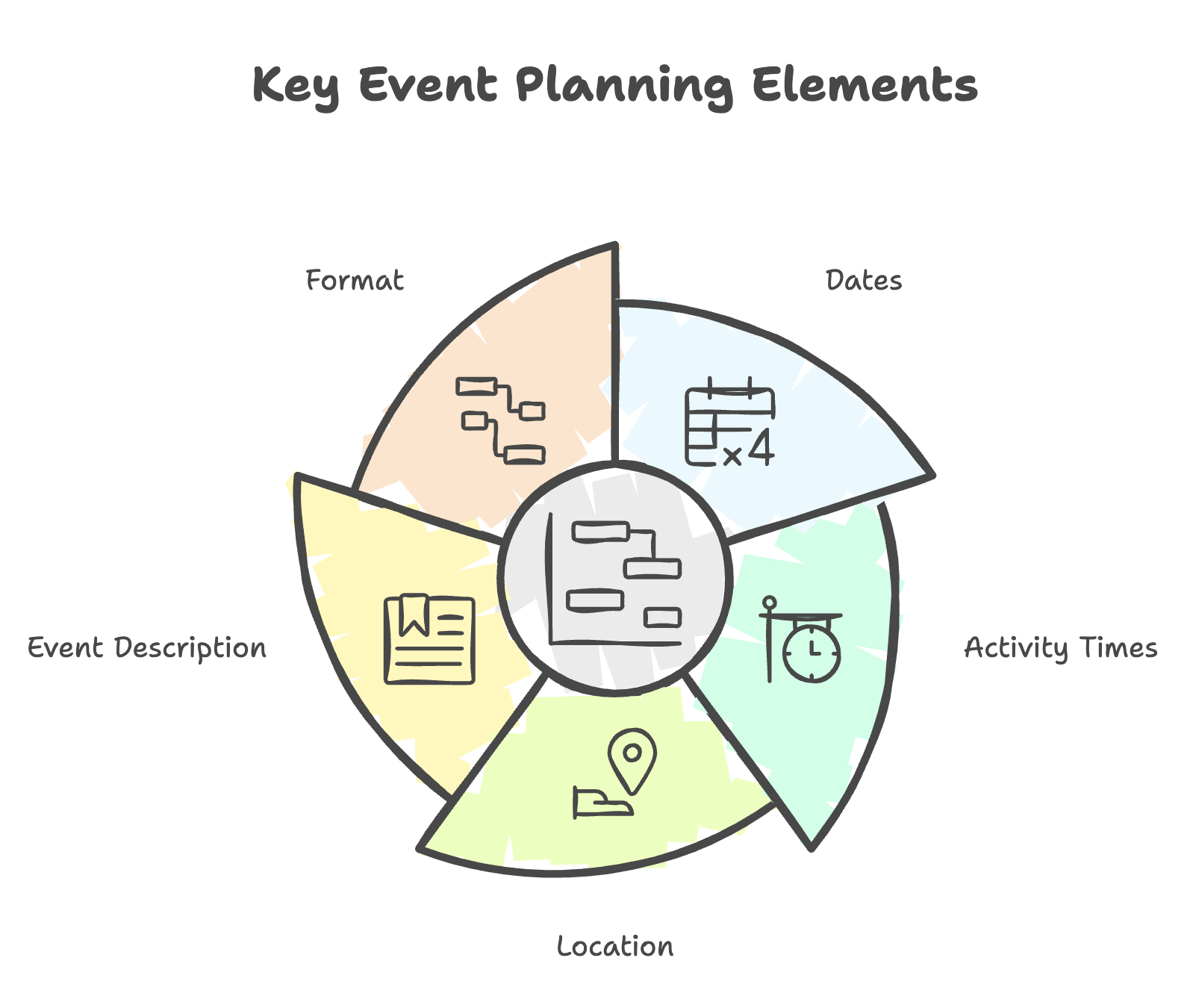
Here is the essential information you’ll need to include in the overview:

  • Event name
  • Dates
  • Activity times
  • Location
  • Event Description
  • Format

Step 2. Define the Objective

Ask yourself, what is the purpose of the event? Is it to generate leads, drive sales, or build brand awareness? Once you’ve identified the main objective, you can start aligning all the other event elements around it.

Define the objective as clearly as possible. Here are some examples:

  • Meet and network with our community of stakeholders, including clients, prospects, and partners.
  • Educate customers on a significant new product launch or brand change.
  • Generate sales for our annual holiday promotion.
  • Acquire new customers in our market.

Step 3. Identify the Target Audience

Who is this event for? Is it for existing customers, new prospects, or partners? The answer to this question will dictate the event’s tone, messaging, and overall experience.

For instance, if you’re planning a conference for C-level executives, you want to ensure the venue is upscale and the topics are relevant to their needs. On the other hand, if you’re planning a customer appreciation event, you want to ensure it’s fun and interactive.

Be as specific as possible when identifying the target audience. Here are some examples:

  • College students who are interested in starting their own business.
  • Working professionals in the industry who are looking for a new job.
  • Stay-at-home parents who are interested in earning an income from home.

Step 4. Set the Tone

What kind of feeling do you want your guests to have when they leave the event? This is what we call the event’s “tone.” The tone should align with the event’s objective and target audience.

For instance, if you’re planning a conference for industry thought-leaders, you would want the tone to be professional and informative. On the other hand, if you’re planning a customer appreciation event, you would want the tone to be fun and festive.

Some examples of event tones include:

  • Intimate and exclusive
  • Fun and festive
  • Professional and informative
  • Luxurious and extravagant

Step 5. Choose the Type of Event

There are many different types of events, but some of the most popular ones include conferences, conventions, trade shows, and exhibitions. Events can also be classified by their size, such as small (under 100 people), medium (100-1,000 people), or large (over 1,000 people).

Here are some examples of event types:

  • Conference: A gathering of people to discuss a particular topic or share information.
  • Convention: A large gathering of people centered around a shared interest, goal, or industry.
  • Trade Show: An event where businesses showcase their products or services to potential customers.
  • Exhibition: A public event where businesses display their goods or services for the first time to generate awareness. 

The type of event will depend on the goals, target audience, and budget. For instance, a trade show might be the best option if you’re trying to generate sales. If you’re trying to build brand awareness, then an exhibition might be the better choice.

Step 6. Choose the Date and Location

The date and location of the event are two of the most important factors to consider. The date should be chosen based on the availability of the venue, the target audience, and the event’s objective. For instance, a date near the holiday season might be the best option if you’re trying to generate sales.

The location should be chosen based on the type of event, the target audience, and the budget. For instance, a city with a strong business presence would be the best choice if you’re planning a conference for industry thought-leaders.

Step 7. Set Roles and Responsibilities for the Team

Now that you have the basics of the event planned, it’s time to start putting together a team to help make it happen. 

Depending on the size and scope of the event, you might need to hire an outside company to help with logistics. You will also need to decide who will be responsible for marketing, budgeting, and customer service tasks.

Many different roles must be filled to successfully plan and execute an event. Here are some of the most important ones:

  • Event planner: The event manager is usually the first point of contact for the client or customer. They are responsible for developing the event concept, setting the budget, and managing the logistics.
  • Event coordinator: The event coordinator works closely with the event planner to ensure that all event details are taken care of. They are responsible for booking the venue, arranging transportation, and ordering supplies.
  • Event marketing manager: The event marketing manager is responsible for promoting the event to the target audience. They develop and implement marketing plans, create promotional materials, and manage social media campaigns.
  • Event sales manager: The event sales manager is responsible for generating revenue for the event. They sell tickets, sponsorships, and exhibitor space.
  • Customer service manager: The customer service manager is responsible for ensuring attendees have a positive experience at the event. They manage customer inquiries, resolve complaints, and provide information about the event.

Depending on the size of your organization and your budget, one person may assume more than one of these roles, or even all of them.

Step 8. Selecting the Right Event Mobile App 

Deciding on the right mobile event app for your event can be daunting. With so many different options on the market, it’s essential to take the time to consider your needs and find an app that will fit both your event and your attendees. Some things to keep in mind include:

  • The app should be easy to use and navigate. Attendees should be able to find the information they need without difficulty.
  • The app should be compatible with multiple devices (IOS and Android). Not everyone uses the same type of phone, so it’s essential to choose an app that as many people can access as possible.
  • The app should offer features that are relevant to your event. For example, if you’re hosting a conference, you’ll want an app that allows attendees to create their own schedule, view speaker bios, and read up on sponsors.
  • The app should be updated regularly. With new versions of iOS and Android released every year, you will need to ensure your app is always up-to-date. Otherwise, attendees may not be able to access it on their latest phone or tablet. By keeping these things in mind, you can be sure to choose the suitable event mobile app for your needs.

Step 9. Create a Minute-by-Minute Update of the Event

This is one of the key ways conference apps streamline event operations and reduce confusion during live events. It should include all the required details, such as the start and end time, the location, the speakers, and the activities.

The schedule should also be updated regularly so that attendees can stay up-to-date on the latest information.

Here is an example of an event schedule:

  • 9:00 am – Registration and Breakfast
  • 10:00 am – Opening Keynote
  • 11:00 am – Breakout Session 1
  • 12:00 pm – Lunch
  • 1:00 pm – Breakout Session 2
  • 2:00 pm – Breakout Session 3
  • 3:00 pm – Breakout Session 4
  • 4:00 pm – Closing Keynote
  • 5:00 pm – Networking Reception
  • 6:00 pm – Event Ends

Step 10. Develop a Marketing Plan

Remember that organizing an event is not just about logistics but promoting it to the right audience. The marketing plan should be developed based on the objectives of the event, the target audience, and the budget.

The marketing plan should include a mix of traditional and digital marketing tactics, such as print advertisements, online ads, email marketing, and social media.

Here are some examples of a marketing plan:

  • Print ads in local newspapers and magazines
  • Online ads on event websites and social media
  • Email marketing to potential attendees and past participants
  • Social media campaigns on Facebook, Twitter, and Instagram
  • Direct mail to potential attendees in the target area

Step 11. Keep an Updated To-Do List

Organizing an event can be a logistical nightmare. There are many details to keep track of, from the venue to the catering and marketing. Keeping an updated to-do list is essential to ensure that nothing is forgotten.

The planning checklist should be updated regularly and shared with the event team, so that everyone is on the same page.

Here is an example of a to-do list:

  • Confirm venue booking
  • Order catering
  • Create event website
  • Print promotional materials
  • Ship event supplies to the venue
  • Coordinate with volunteers
  • Finalize speaker lineup

Organize Your Event and Improve Attendee Engagement with Yapp

Each event comes with its own unique set of challenges. But with the right tools and execution, any event can be a success. This is where Yapp comes in.

With Yapp, you can easily create a custom event app without coding. Attendees can use the app to stay up-to-date on the latest information and interact with other attendees. You can use it to keep everyone up-to-date via push notifications. For larger events, you can even create a second smaller app to be used by your organizing team to coordinate the behind the scenes details and logistics needed to make the event a seamless success!  

Get started with Yapp‘s free trial today to make your next event a success!

Sustainable Events: Redefining the Future with Yapp Mobile Event App

  • Yapp shows why taking your event mobile is a practical step for both attendee experience and sustainability.
  • Mobile event apps reduce paper waste while making updates, schedules, and communication easier to manage.
  • Event planners who want greener, more efficient events should use this strategy.

Today, the world is more conscious than ever about the impact of our actions on Planet Earth. Environmental sustainability is not just a trend; it’s a responsibility we all share, especially event organizers.

As the pioneers of event experiences, we must consider the implications of our choices on the environment, notably the astronomical waste generated at events. Fortunately, event technology like Yapp’s mobile conference app can help us transition to more eco-friendly practices.

The Environmental Cost of Paper-Heavy Events

Let’s start with a startling reality: even a small event with 1,000 attendees, using 100 sheets of A4 regular printing paper per person, results in significant environmental damage.

We’re talking about the destruction of 12 trees, the emission of 0.75 tons of CO2, and the waste of 1 million liters of water.

These figures do not even account for additional paper-related waste such as shipping boxes, cardboard signage, or disposable cups and plates. Clearly, we need a change.

Embracing the Digital Shift with Yapp

Transitioning to a mobile event app like Yapp can effectively address these environmental issues. Yapp offers a platform to create interactive, real-time event experiences without relying on paper.

Whether you’re planning in-person events, virtual events, or hybrid events, Yapp provides the functionality needed to streamline your event management process, all while reducing your carbon footprint.

Benefits of Yapp’s Mobile Event App

The following includes a summary of some of Yapp’s most coveted features. Check out our full features page to learn more.

  1. Real-Time Updates: With Yapp, last-minute changes are no longer a cause for concern. The app features allow you to instantly publish modifications, ensuring that your attendees always have access to the most accurate event information.
  2. Interactive Engagement: Boost attendee engagement with features like live polls and gamification. These interactive elements enhance the event experience, keeping your audience engaged and informed.
  3. Efficient Communication: From push notifications to in-app messaging, Yapp facilitates real-time communication with attendees. Keep them updated about upcoming events, changes, and important announcements, all through their mobile devices.
  4. Sponsorship Opportunities: Yapp’s app features banner ads and exhibitor profiles, allowing you to offer valuable sponsorship opportunities while maintaining a paper-free event environment.
  5. Detailed Analytics: Track event success with Yapp’s metrics, including attendee engagement levels, participation in quizzes, and interaction with exhibitors. These insights can help inform post-event strategies and planning for future events.
  6. Cost Savings: By reducing the need for printed materials, and affordable pricing, Yapp helps you save on printing and shipping costs, resulting in a more budget-friendly event.
  7. Attendee Networking: Yapp’s attendee profiles and interactive maps facilitate attendee networking, enhancing the overall event experience.

Create a Future of Sustainable Events With Us

Taking your event mobile with Yapp is not just about creating an efficient event planning process. It’s about aligning your events with the global need for sustainability. By choosing Yapp, event planners can contribute to the preservation of our planet while still delivering an unforgettable event experience.

From trade shows to webinars, from bios to ticketing, Yapp’s end-to-end platform provides the tools necessary to plan and execute any type of event with ease. Whether your attendees are connecting from Android, iOS, or web, Yapp ensures a seamless experience.

So, are you ready to redefine your event success with the best mobile event app for creating an interactive, functional event platform?

Start Your Free Trial

How Conference Apps Streamline Event Operations

  • Yapp shows how conference apps streamline event operations by centralizing communication and event details.
  • Mobile schedules, updates, documents, and engagement tools reduce manual work and help teams respond faster during live events.
  • Conference organizers who want smoother operations and fewer logistical headaches should use this approach.

The primary purpose of a conference app is to serve as a digital platform where attendees can view the event schedule, receive updates and announcements, interact with other attendees, and provide feedback. 

However, conference apps can do much more than that; they also help streamline the operations of events.

For event managers, running a successful event is not only about ensuring that the attendees have a good time, but also about making sure that the event runs smoothly from a business standpoint. This is where conference apps come in handy.

In this blog, we do a deep dive on how conference apps help streamline operations for in-person events.

How to Use Conference Apps

Conference apps are mobile event apps that help event managers with business operations in several ways.

Communicate with Attendees

Conference apps have several features that help event managers communicate with attendees. 

Announcement features allow event managers to send announcements and updates to all attendees.

These features can help managers keep event attendees informed about important updates and announcements and allow event planners to resolve issues and respond to questions in a timely manner.

Collect Feedback

Conference apps make it easy to collect feedback from attendees. Feedback features allow event managers to poll attendees and collect feedback about the attendee experience. This information is valuable because it helps event managers identify areas that need improvement.

Conference apps often include features allowing attendees to provide feedback in real-time. This information is valuable because it enables event managers to make changes on the fly and improve the event experience.

Benefits of Conference Apps 

Conference apps are incredibly helpful in streamlining business operations. Here are a few examples of the benefits of using conference apps.

Save Time and Money

Conference apps can help event managers save time and money. For example, conference apps can create digital event programs that can be easily updated and distributed to attendees. This eliminates the need to print and ship physical event programs, which can save event managers a significant amount of time and money.

Improve Event Logistics

Conference apps can also help improve event logistics by making it easy to track attendees and communicate with them in real-time. For example, if part of the event is running late, conference app features can help event managers quickly communicate the new event agenda to all attendees.

Increase Attendee Engagement

Event management apps can increase attendee engagement by over 41% by enabling event planners to create custom agendas, send announcements and updates, collect feedback, and more.

Additionally, conference apps often include features that allow attendees to interact with each other, such as in-app messaging and networking features. 

How to Choose the Right Conference App for Your Needs

Now that you know the benefits of conference apps, how do you choose the right one for your needs? Here are some factors to consider:

The Size of Your Event

For large events, you will need a conference app that can accommodate many attendees. It should be able to handle a high volume of traffic and it should have features such as an in-app messaging system, live polls, and, for the truly enormous events, include a floor plan with beacons for attendees to find their way around.

Your Budget

Your budget will play a determining role in the app you choose. While setting a budget for the app, consider the overall value it will add to your operation. 91% of event planners report a positive event ROI (return on investment) from using event management software, according to the State of Mobile Event Technology Report).

User Interface of the App

The user interface (UI) of the app is important because it will determine how easy it is for attendees to use the app. If the app is difficult to use, attendees will be less likely to use it. This can be a deal breaker for some attendees.

When evaluating the UI of a conference app, consider:

  • How easy is it to navigate?
  • Is the design clean and modern?
  • Is the app responsive, i.e., is it fast and does it work well on all devices?

Best Practices for Using a Conference App 

Now that you know how to choose the right conference app for your needs, here are some best practices for using one to improve.

Test the App Before Your Event

Do not, and we repeat, do not wait until the day of your event to test the app. Test it out well in advance so that you can identify any glitches and correct them before the event. 

While testing, try to think of the worst-case scenarios and test those out as well, such as changes to event sponsors or event schedule. This will give you a good idea of whether you can rely on the app during your event.

Use the App to Its Full Potential

Don’t just use the app for the sake of using it. Use the features that will add value to your operation and make your event more efficient. For example, push notifications that allow you to send in-app messages to attendees during the event to ensure they are kept up to date about schedule changes.

Train Your Staff On How to Use the App

Your staff should be familiar with how to use the app before your event. They should know how to navigate the app and how to use its features. Consider creating a training manual or video tutorial for them to reference. You don’t want to run into technical difficulties during your event because your staff is not familiar with app features.

Promote the App to Your Attendees

Your attendees will only use the app if they know about it. Promote the app before your event and remind them to download it. You can promote the app through your event website, social media channels, and email list. 

For example, you can create a landing page on your website with all the information about the app and how to download it.

For attendees who have not installed the app prior to the event, make sure that you have signage at registration and interstitial slides that includes a QR code they can scan to install the app.

Collect Feedback from Your Attendees

After your event, collect feedback from your attendees about their experience with the app as part of your post-event survey. This will help you identify any areas for improvement. For instance, if many attendees complain about the app crashing, you know you need to find a more stable app for your next event.

Decide Your Goals Before Choosing the App

What do you want to achieve by using a conference app? This could be anything from reducing paper waste to making your event more interactive. By having defined goals, you can choose an app that will help you achieve them.

Consider the Entire Event Lifecycle

When choosing a conference app, it’s important to consider the entire event lifecycle. This means thinking about everything from pre-event marketing to post-event follow-up. For example, you may want an app that allows you to send push notifications to remind attendees about your event  and follow up with them afterwards.

Choose an App That Offers Support

No matter how well you plan, there is always a chance something might go wrong. That’s why it’s important to choose an app that offers support in case you run into any technical difficulties. A good conference app will have a dedicated customer support team to help you with any issues you may have. 

Plan Your Next Event With Yapp’s Custom Event App

Yapp’s custom mobile event app streamlines the event management process and helps you organize a memorable event. 

With Yapp, you can centralize all your information, reduce paper waste, and promote attendee engagement at your event. You can create your app in minutes with no coding skills required! If you do run into any issues, Yapp’s customer service team is ready to help.

Interested in learning how to improve the event experience for you and your attendees? Start your 14-day free trial today!

Container App vs White Label Event App: How to Pick the Right Solution

  • Yapp compares container apps and white-label event apps to help planners pick the right format for their needs.
  • The tradeoff usually comes down to speed, cost, app store complexity, and the level of customization you want.
  • Event organizers evaluating app strategy and budget should use this comparison.

In the event planning industry, there are two main approaches to developing an event mobile app for your business: container apps and white label apps. Both have their pros and cons, so it’s important to understand the difference between the two before deciding.

In this article, we look at the two main types of event apps on the market: container apps and white label apps. We’ll explore the key differences between the two and help you decide which is the best option for your business.

What Is a Container App?

A container app is an event hosting app that “contains” multiple event apps within it. Think of it as an umbrella.  

Benefits of Container Apps

  • Cost-effective: Container apps are often more cost-effective since they can be used for multiple events.
  • Doesn’t require coding skills: While development requirements vary from app to app, Yapp doesn’t require any prior coding or software development experience to use!
  • Instant publishing and updates: With a container app, event organizers can make changes to the app without having to wait on app store approvals as is the case with custom, white label event apps. This makes it much faster and easier to communicate real-time changes during your event.
  • Higher degree of flexibility: Container apps offer more flexibility than white label apps. This is because they can be used for multiple purposes and can be easily customized to meet the needs of each individual event.
  • Can be used for multiple events: As mentioned above, container apps can be used for multiple events. This is a tremendous advantage if you host multiple events at different times throughout the year.

Drawbacks of Container Apps

  • Less design customizability: If you were aiming for designing a completely custom-built app for your event, a container app is likely not going to be a great fit because you are limited to the customizations provided by the container app.
  • No App Store Discovery: Users can’t go to the App Store and search for your own event app’s name and find it because it will be under the name of the container app.

What Is a White Label App?

A white label event app is an event app that is developed by a third-party company and then branded with your company’s name and logo. Unlike container apps, white label apps are only used for one event.

Benefits of White Label Apps

  • Easier to brand: White label event apps are easier to brand as they are only used for one event. This means that you can have a custom logo and branding that represents your company.
  • High degree of customization: White label apps offer more customization options as they are developed specifically for your event. This means that you can have an app that is truly unique to your brand.
  • Lower competition: Since white label apps are only used for one event, there is less competition within the app. This can be a big advantage if you don’t want your users to be distracted by other events.

Drawbacks of White Label Apps

  • More expensive: White label apps are often more expensive than container apps since they are developed specifically for your event.
  • Requires more planning: White label apps require more planning as they are only used for one event. This means that you need to have a clear idea of what you want your app to do before the development process begins. White label apps also need to be independently approved by Apple and Google, a process involving extra time and cost as well as the risk of rejection.

How to Pick the Right Solution

Now that you know the difference between container apps and white label apps, it’s time to decide which one is right for your business. Here are a few factors to consider:

What Is Your Budget?

If you have a limited budget, consider going for a container app to avoid overspending on your event. Event app providers can spread the cost of building and maintaining container apps across lots of customers and events, passing on the savings to you.

If you have a larger budget, then white label apps are an option for you. This is because they offer a higher degree of customization as they can be built from scratch specifically for your event.

How Many Events Do You Host?

If you have a larger budget and run multiple events per year, you could develop your own white label app for each event. However, container apps can be equally good for this. At Yapp, we’ve realized that the more event apps a customer creates with our platform, the faster and more efficient they get.

What Is Your Timeframe?

If you have a short timeframe, then container apps are preferable. They can be quickly customized specifically for your event and don’t require as much planning.

If you have a longer timeframe, then you can consider a white label app. They allow you complete freedom in terms of build and aesthetic but because of that, require more development time.

What Is Your Goal?

If your goal is to create a truly unique app that is branded to match your company, then you will prefer a white label app.

If your goal is to create an app that is flexible, quick to create, and economical, then container apps provide the features you need.

How Crucial Is Brand Presence for Your Event?

While white label apps can be branded to match your company, container apps typically havebrandable elements that can be customized for each individual event, so for this one, it’s really a matter of preference as both allow you to showcase your brand.

Do You Have Specific Sponsorship Needs?

You may have sold event sponsorships that promise a specific type of digital showcase. If that’s the case, you will need to be sure to choose a technology provider and app type that allows you to deliver on that promise.  Keeping an open line of communication with your sponsors will help ensure that you make the best decision for your event.

Factors to Consider When Choosing An Event App 

When choosing an event app provider, here are a few factors you should consider.

  • Pricing: The pricing should match your budget as well as the features and functionality you need. 
  • Ease of use: The app should be intuitive and straightforward to navigate and maintain. 
  • Customer support: The provider should offer excellent customer support in case you have questions or need help troubleshooting the app. 
  • Features: The app should have the features you need, such as social media integration, push notifications, and event management tools. 
  • Customization: The app should be customizable to match your brand and the needs of your event. 
  • App store guidelines: When submitting your app to the app store, there are multiple guidelines that must be followed. With Yapp, you can forget about this process entirely!

Questions to Ask Potential Event App Providers

When meeting with potential event app providers, there are a few questions you should ask.

Can I See Some Examples of Your Work?

Event apps can greatly vary in terms of quality and features. It’s important to see event app examples to get an idea of what they’re capable of. Look for event apps that align with the type of event you’re planning as well as your budget.

What Features Do You Offer?

Be sure to check that the event app features suit your needs. In particular, you’ll want to make sure that the provider offers all the features you need for your event. If they don’t, then you’ll want to move on to another provider.

How Much Do Your Services Cost?

Be sure to review the pricing for all the features you need. In some cases, certain features cost extra. When inquiring about event app pricing, you can also ask if there is a free trial available. Unfortunately, many providers make you contact their sales team to find out pricing. Not Yapp, though – all pricing is public and you can purchase without ever talking to us if you prefer.

What Is Your Customer Support Like?

Excellent customer support is absolutely necessary when working with event apps. If issues come up, it’s important to have a provider that can help you resolve them in a timely manner.

Create a Custom Event App with Yapp

At Yapp, we understand the events industry and the challenges of event professionals. That’s why we offer a custom event app platform that takes care of the heavy lifting for you. With Yapp, you can create an event app and add event information in minutes, with no coding or design experience required!

Yapp’s integrated solution is straightforward to navigate and comes at a lower cost than other options. Plus, our platform is backed by 24/7 customer support. All maintenance and app store compliance are handled by Yapp, you can rest assured that we’ll be there to help you every step of the way.

Interested in learning how to make your next event a more successful event? Try our 14-day free trial today!

In-Person Events Are Going to Look Different: Your Guide to Going Back

  • Yapp explains why returning to in-person events requires updated planning and attendee communication strategies.
  • Flexible logistics, clearer information sharing, and better preparedness help events adapt to a changed live-event environment.
  • Organizers planning the transition back to in-person gatherings will benefit most from this guide.

The pandemic has introduced a whole variety of changes to our workplace.

From online-based work from home during the heights of the pandemic to virtual events and conferences, and even to online concerts, almost every aspect of our work and leisure has taken root in the online world.

As pandemic restrictions wind down, there’s a tangible yearning for in-person events to return. But with our growing reliance on digital solutions, how do we find our way back to creating engaging and exciting face-to-face events?

This article will look at how organizers can best prepare for the return of in-person events and put their best foot forward.

Tips to Prepare In Advance For Potential Issues

Before you can launch a good in-person event, you need to be prepared for any eventualities that may arise because of the differences in implementing online and in-person events.

Here are some solid tips that you can use to prepare for potential issues.

Observe New Rules

Although COVID-19 restrictions have loosened up, there are still a myriad of safety precautions that event planners have to follow, depending on their location.

You may have requirements that weren’t needed in the pre-pandemic era. These include event safety measures, such as proof of vaccination or a negative COVID test from event attendees and/or temperature checks.

Some event organizers are implementing touchless sanitation areas onsite to increase attendee comfort levels and following social distancing guidelines and other safety protocols.

You also need to advertise your safety precautions so attendees don’t feel discouraged from registering for the event. Besides advertising your safety protocols, you can also require attendees to do a pre-event check-in and give QR codes to those who have met your event safety guidelines.


Since public health and hygiene have become the priority of many people, ensuring that new rules are followed can not only build trust among your attendees, but can also enhance the overall event experience.

Policies will vary depending on your state and the latest guidance from the CDC. You need to follow them to the letter or risk your event or conference being denied the permits. Make sure that you do your research and know which laws apply in your state and for your event.

Have Backups for Your Backups

You may have already forgotten about venue capacity, breakout rooms, contracts, and more, but with the return of in-person events, you’ll have to add these things back into consideration.

With the way the events industry is currently tasked to handle ever-changing regulations, you need to have several layers of contingencies to ensure that you don’t sacrifice attendee experience and event quality.

Plan for Low Turnout at the Beginning

You should expect your first few events to not get the turnout that you might have been used to pre-pandemic. Although people are eager for in-person gatherings, many are still understandably hesitant to commit to in-person plans.

More than that, it’s unavoidable that some of your key attendees have also grown to prefer the convenience of virtual settings.

As the pandemic continues to loosen up its hold on the world, you must continue to keep creating outstanding events, even if turnout is lower in the first few tries.

Keep Your Attendees Updated

Although our lives have become more predictable, there’s still no assurance that plans will go as expected. Things can still change in a flash, so you need to ensure that you can adjust to any eventualities.

One of the most important aspects of this is to keep your potential attendees updated in real-time.

Since everything is still in flux, you also need to ensure that your attendees are well-informed. This lets them adjust appropriately to any situations that might happen, as well as ‌supporting attendee engagement.

You can do this by using an event mobile app like Yapp. Yapp enables event organizers to send unlimited push notifications right from their phone, which you can use to promptly alert attendees when a significant development occurs.

6 Event Best Practices to Increase Event Attendance and Engagement

Now that we’ve done our best to prepare, we can focus on the actual steps that you can take to create an outstanding event.

1. Choose Your Venue Carefully

The venue is going to be one of the most important factors that you need to consider when preparing for your in-person event. Not only does it set the tone for your entire event, but it will also dictate several logistical issues that might severely affect your attendees’ engagement levels.

Thus, choose your venue carefully by keeping these things in mind.

  • Capacity. Make sure that your venue has the right capacity for your approximate number of attendees adjusted for the COVID policies in your area.
  • Parking space. Consider how many people are going to be bringing cars and where they can park them.
  • Ambiance. Make sure that your event has the atmosphere you’re going for in your event. Things to consider are lighting, sound dynamics, and decor.

2. Know Your Budget and Needs BEFORE Executing

This is one thing that many event managers struggle with: budgeting mistakes. Not knowing how your needs fit into your allocated budget can have serious consequences.

Never execute an event without a clear financial plan. Ideally, plot out every foreseeable expense and then allocate a certain percentage of your budget for contingencies.

Don’t forget to factor in the budgetary contributions of your sponsors. Getting event sponsorships can help offset the costs of your event. Sponsorships don’t always come through, so never rely on promised money until it is in your bank account.

3. Give Your Attendees What They Want

Learn who your key attendees are and then give them what they want.

This goes further than simply giving attendees what they’re expecting. If you truly want to make your event stand out, go above and beyond your attendees’ expectations.

You can do this by getting firsthand information from your target demographics. Create a profile of your ideal attendee by finding out the following:

  • Socioeconomic demographics. These metrics can be determined by things such as gender, age, and income level.
  • Interests. Find out what your attendees like to do in their free time, what drew them to your event, and how their interests relate to your event.
  • Behaviors. What does your audience like to do? How do they do it? Can you make their habits easier for them? Is there any way that you can do so while improving event engagement?

4. Plan Structured, Interactive Activities and Agendas

Whatever event you have in mind, plan it with structured and participatory mini-events. Choose activities that are appropriate for your event and center your event or conference around these interactive events.

For example, tech events can host coding showdowns and academic conferences might use breakouts with hands-on activities.

An event where the attendees do nothing but sit down all day is unlikely to garner engagement and can reduce your chances of improving attendance at future events.

5. Include Your Partners

Your partners and sponsors are critical to making your in-person event work. Be sure you show your appreciation publicly by featuring them at your event.

This could look like a banner, a sponsored event space or activity, a partner collaboration at the event, or a sponsorship banner via your event app.

6. Support Your In-Person Event Goals with the Right Tech

In-person events require the support of social media and event planning tools. Many aspects of running an event in person are now managed with digital devices. Things like ticketing, scheduling, and security are all necessary aspects of your event, and your event really won’t work without the right technology.

Thus, you need to do your best to find the best tech suitable for your situation, whether you’re buying new software or shifting to another one to improve how you use them.

One of the most important technologies you need to use is event mobile app like Yapp, that can help you create an optimal event experience.

Ensure Your Next Event Is a Success with Yapp

Event management is no simple task. Sometimes, it might feel as if there are far too many moving targets we have to hit. This is even more compounded by trying to master in-person events in a world where there is still a risk of pandemic surprises.

If you want to ensure the success of your next event, one of the best things you can do is use an event mobile app such as Yapp.

Yapp is a one-stop shop for everything you need in an event mobile app. From scheduling, to networking, to real-time communication, you have everything you need to hit it out of the park at your next in-person event.

Try Yapp Today

How to Increase Engagement at Your Next Internal or Private Event

If you’re unsure about how to plan an important internal meeting or conference where employee engagement is essential, you’re not alone.

This is a common struggle for those who plan internal events and private membership conferences‌.

If that’s you, you’re in luck! Today we’re sharing a few key ways to increase engagement at your next internal or private event.

Tip 1: Connect on Social Media

Today, it’s all about connecting on social media- no matter what the event is. 

For private events, this is still very important as it allows you to generate excitement and anticipation for the event itself. 

Utilize hashtags, post behind-the-scenes photos/videos, give sneak peeks of the event space or keynote speakers, and more. 

This is a great way to not only engage with those who are attending the event but also generate interest from those who are on the fence about attending.

You can also create a private Facebook group or LinkedIn group for attendees to connect with one another before, during, and after the event. 

This is a great way to build community and keep everyone engaged throughout the entire process.

Tip 2: Make it Interactive

Try to get your attendees to interact at the event as much as possible. 

This can be done in a number of ways, such as incorporating raffles and giveaways, having speaker Q&A panels instead of just lectures, and hosting networking opportunities.

Making the event interactive will not only keep attendees engaged during the event, but it will also create lasting impact so they’re more likely to return for the next one!

Tip 3: Get Feedback

Don’t forget to get feedback from attendees after the event! This can be done through surveys, post-event focus groups, or even just informally asking attendees what they thought of the event. 

Collect this and share the best quotes with your organizing team.

Tip 4: Measure Engagement to Validate Your Efforts

It’s critical to track important metrics while monitoring engagement at your event.

 As a good event planner, you need to know how to measure the success of your event marketing strategy. 

Here are a few important metrics to track:

  • Event registration (if event attendance is not mandatory)
  • Highest Engagement Session or Speaker (based on session attendance)
  • Post-event survey responses and completion rates

With these metrics, you’ll be able to see what’s working and what isn’t when it comes to engagement. 

This will help you to fine-tune your event strategy and ensure that each event is more successful than the last.

BONUS Tip 5: Do All the Above with an Event Mobile App

If you really want to take event engagement to the next level, consider using an event mobile app like Yapp, which can provide steps 1-4 in a single app.

An event mobile app will allow attendees to connect with each other, interact with event content, and provide valuable feedback – all in one place.

  • Social Feed: With features like push notifications, in-app messaging, and a social feed, you can be sure that your attendees will be kept informed throughout the event, even after it’s over.
  • Interactive Features: Additionally, it provides a way for attendees to interact with one another and share their thoughts and experiences, providing a greater sense of community for everyone.
  • Post-Event Surveys: With Yapp, you can easily collect feedback after the event by sending out surveys to all attendees. This valuable feedback will help you plan even better events in the future.
  • Event Analytics: Last but not least, Yapp’s event analytics allows you to see which sponsors or sessions are being engaged with the most, what content is being shared, and more.

Overall, using an event mobile app is an excellent way to increase engagement at your next internal or private event, and it can help you simplify the challenges of communicating with your attendees, too.

Additional Tips to Ensure Your Next Internal Event is a Success

While the tips above are an excellent resource to streamline event management and ensure your attendees are engaged, there are some essential planning best practices that can help you simplify event planning before it even starts!

  1. Select your goals. First and foremost, you must define precisely what you’re hoping to achieve, without goals set ahead of time, you may find you’ve wasted time and resources prioritizing the wrong things.
  2. Build an entertaining schedule. As an event planner, it’s important to arrange and space out your activities, talks, panels, etc. in a way that keeps attendees interested but not overwhelmed. Don’t cram too much into one day.
  3. Identify your key metrics. Now that you’ve determined your objectives and the time frame you’re supposed to accomplish them, it’s time to consider how you’ll measure them. Decide on which key performance indicators (KPIs) matter to your team–we’ve given some examples above to help you get started.
  4. Determine how you’ll measure KPIs. Flesh out your KPIs and goals by adding detail about how you’ll achieve them. What steps must team members take to ensure they can actually track and measure each key metric.

Why Use Yapp For Your Next Internal Event

Yapp is an event management solution that offers the easiest way to build your own internal event app using a simple drag-and-drop editor and features perfect for event managers without a design or development background.

With Yapp, you can build an internal event app that streamlines event planning and keeps team members engaged. Aside from empowering you to achieve all the tips mentioned in this post, Yapp offers the following impressive benefits.

  • No Coding or Developers Needed

No coding knowledge? No problem! You don’t need it with Yapp because Yapp does it all for you. Our simplified drag and drop features empower you to quickly add details, upload materials and plan for your event in days instead of months when working with a developer.

  • Customizability

Yapp allows you to customize your event app, down to the logo, with no coding skills required! With Yapp, you can dedicate the entire app to events like sales kick-offs, company offsites, or internal training sessions. 

  • Better Team Communication 

Your attendees aren’t the only ones that need to know what’s going on. With Yapp, your team members on the floor can easily download the event app and get instant updates regarding event details so they can adjust when needed to keep things flowing well. 

Ready to make your next event as painless as possible? Try out Yapp today!

The Ultimate Guide for Hosting a Virtual Event or Conference

  • Yapp offers a practical guide to hosting a virtual event or conference successfully.
  • Strong planning, thoughtful content, reliable communication, and the right technology stack help virtual events feel more organized and engaging.
  • Teams running online conferences, webinars, or digital gatherings will benefit most from this framework.

The push for digitization has come more rapidly than expected.

Because of the pandemic, virtual events have become the new norm for whatever you are doing. Whether you’re working with your team, interviewing potential new hires, or even holding a big conference.

While this presented many downsides, especially during the rough adjustment period at the start of the pandemic, it’s now undeniable that virtual events or conferences have their merits.

But with COVID restrictions easing around the world, you now find yourself with more options than before.

During pre-pandemic times, conferences and events automatically happened face-to-face. At the start of the pandemic, nobody had any choice but to meet digitally. We are in a unique position where we can now choose between in-person, digital, or hybrid settings for our events.

How do you choose the method for your events? What factors should you consider? Is your event suitable for an online environment?

This article will help you decide on the best forum for your event and provide you with seven concrete steps to have a successful virtual event or conference. Let’s dive right in!

First: Should You Host A Virtual Event?

Before we get into the ones and zeros of virtual events, we first need to determine whether we should put our event in the virtual sphere.

We now have the technology and culture in place for a virtual setting, but many still yearn for traditional personal face-to-face meetings. More than that, each setting also has its advantages and disadvantages, which may or may not align with your company.

The first step is to determine if it makes sense for your business to host a virtual event, considering logistics and the expectations of your target audience.

Some events or conferences are all about the in-person experience, and recreating that on a virtual event platform can be challenging.

For instance, in-person conference attendees may purchase a ticket specifically because of the activities or perks they can expect at the venue. Prepared foods, open bars, happy hours, and live music are often part of a physical event experience that may not be possible to recreate online.

You can get creative and create an engaging virtual experience with live demos, cocktail recipes, and custom Spotify playlists.

At the same time, it might be easier to secure world-renowned keynote speakers and exceptional presentations for your online conference. After all, there’s no need to worry about travel, time zones, and physical constraints when creating a great virtual experience. All you need is the right platform, and you can have a successful virtual conference.

To determine if it makes sense to be hosting virtual events, start by creating a simple checklist of all the activities, people, and sessions you have planned. This checklist will help give you a good overview of what will be possible to recreate online.

Consider Your Logistics

After you have those basics defined, you can start getting into the thick of it by considering the logistics involved.

If you’re still undecided about how you should hold your event, you can likely finalize your decision when determining logistics. Ask yourself questions that determine your capabilities and resources, such as:

  • What’s the type of event you want?
  • Who’s your target audience?
  • What’s your time frame?
  • How much is your budget?
  • Who do you plan to invite as guests? Speakers?

Hashing out your logistics will help you iron out the details of your event. You can use this information to determine your final budget, tasks, people in charge, and more.

There are three categories of logistics that are directly tied to your event: venue, legal, and software.

Venue Logistics

Here are a few venue logistics you need to consider if you’ve booked a venue, specifically if you’re thinking about changing your event to go online.

  • Vendor commitments. Confirm whether you’re able to get out of vendor commitments. Some places may not allow you to cancel, or only reschedule your booking, so you’ll want to know this first.
  • Audience reach. Without a physical venue, you’re no longer limited to a certain number of attendees for activities or breakout sessions. By not being restricted to a place, you can expand your audience to other groups. On the other hand, satisfaction will probably be higher with in-person events.
  • Schedule re-creation. Without designated rooms for speakers and activities, you’ll need to consider how to recreate your schedule online using technology. For example, you can create a Yapp Multi-Track page with dedicated Zoom Breakout Rooms meeting links that allow you to host individual breakout sessions online at the same time.

Legal Logistics

Similarly, you need to consider the legal logistics involved with taking your event online, such as canceling vendor contracts or meeting compliance standards.

  • Venue contracts. Do you already have a contract for a venue drafted out? If not, going online will be very easy. If you do, you may want to involve your legal team. They’ll be your best resource for understanding the terms and what you can or can’t reasonably do when negotiating your cancellation.
  • Permits and licenses. What legalities and permits are required for an in-person event to function? Do you still need them if you go online? Can you recoup the costs of obtaining them if you already acquired them? Can they be extended for future on-site events?
  • Security and compliance. Taking your event online may involve security and compliance requirements that you’ll need to verify. For example, you may need to ensure that any new software used for hosting your online event meets standards such as HIPAA, ISO, or GDPR, depending on your event’s industry and regulatory requirements.

Software Logistics

Finally, while many companies are already using video conferencing software for meetings or remote work, that doesn’t mean that these tools make sense for your online event.

Event planners need to consider the type of virtual experience that they want to create, as well as their budget, preferred features, channel security, and more.

Are you considering buying a platform? Does it make sense for your business in the long term? You’re going to want to look at these factors when making your decision.

Therefore, here are a few software logistics you’ll want to consider.

  • Platform compatibility. Your virtual conference platform should be compatible with various operating systems and devices. Some event apps are built for iOS only or Android only or lack web viewing. Since many people consume media on various devices, ‌pick software that considers your audience’s media consumption and device needs.
  • Tech support. You need to be able to provide some sort of tech support for your virtual attendees, regardless if you’re doing webinars or live streaming. Although event technology has already come a long way, not everyone can troubleshoot glitches and other errors on their own.
  • Attendee engagement. The software you use should allow you to engage attendees while providing excellent user experiences. Is the interface minimalist? Is it easy to view content on the app even with spotty Wi-Fi? Can attendees easily chat and network with each other?
  • Security and restriction. If you need to restrict your event, app, or content to a particular audience, then look for software with privacy settings. For example, if it’s an internal company event, ‌restrict your app to a specific list of people, such as active employees only.

How Do You Take Your Event or Conference Online?

Once you’ve evaluated the pros and cons of taking your event online, you’ll want to make a plan for the shift. Having clear next steps will allow you to achieve your desired results smoothly.

To help you make the shift, here are seven steps for hosting an online event or conference.

1. Organize a checklist of everything and everyone involved

The key to hosting a successful event or meeting is organization. To ensure you don’t miss anyone or anything, we recommend building a checklist of all your event to-dos.

This foolproof event planning guide provides helpful tips for which tasks to accomplish the months, weeks, and days approaching your event. Tasks like searching for sponsors, finalizing your speakers’ list and presentation times, sending reminders, and promoting your function are just some examples of what you’ll want to complete in advance.

Whatever software you use, the key is making sure everyone is aware of what needs to be accomplished and organizing those tasks to tackle them together.

2. Figure Out Your Event Strategy as a Team

There are lots of different directions that you can take when building an event strategy.

Figuring out which channels to focus your energy on and what content to create are critical aspects of your event strategy that you’ll want to plan with your team.

Remember to focus your efforts and not stretch yourself too thin, especially if you’re on a tight deadline. To decide where to focus, ask yourself these questions when figuring out your digital events strategy are the following.

  • Which channels produce the most qualified leads and customers?
  • What email reminders do you plan to send before, during, and after the event?
  • How will you use social media to promote your event or create engagement?
  • What other assets do you need to create to support your event?
  • Where will you host your content, files, presentations, and images?

By asking yourself these questions, you’ll be ready to host an in-person or online event, such as sending event change updates and push notifications via your mobile app.

3. Reach out to your speakers and vendors

By far, one of the most critical aspects of event planning is making sure that your speakers, sponsors, and vendors are well-informed.

If you are still ‌selecting sponsors or speakers, consider sending them an outreach email that includes the details of your event. You can also link them directly to the event they’re speaking at right from in your event app. 

If you already have your speakers selected, ‌schedule a follow-up email to thank them for agreeing to present. If it’s a sponsor you’re conversing with, reach out to them about doing mobile banner ads within the event app.

4. Get Others Engaged with Reconfiguring Your Event

Even if you have a dedicated meeting planner organizing your event, you need to get others involved, especially when reconfiguring your event for a virtual setup.

Here are examples of specific points in your event that will need involvement from different resources to transition to online.

Website Access

You’ll need to set up a way for attendees to access the event online on the day of, as well as the ability to register if they haven’t already. Technical resources will be required to make sure everything operates smoothly.

Page Visibility

Setting up an online-only event page differs from an event page that has a location. The way the page displays in Eventbrite and search engine results will be different. If you search “events this weekend near me,” Google may show events from websites like Eventbrite that are at a venue near you based on your location.

5. Decide on the best software for hosting your event

Without the right software, hosting a high-quality virtual event will be difficult and likely result in a mediocre attendee experience. There are many good options for hosting virtual events such as Zoom, GoToWebinar, and Demio. 

But what if your event is hybrid or in-person?

In that case, rather than a tool that will help you broadcast the event, you need something that will help guests stay engaged and interactive during the event. This is where an event mobile app like Yapp can be a game changer!

With Yapp, you can keep your attendees and your event team informed in real-time about the schedule and any changes. Plus, you can provide a social feed for attendees to share photos and stories along with their event experience. 

6. Update your marketing and sales content

Shifting to an online event strategy also requires updating event marketing and sales content that you previously published or had planned. The most critical content to prepare and update includes:

  • Reminder emails and save-the-date
  • One-on-one sales and outreach emails
  • Customer success emails
  • Push notifications
  • Website landing page
  • Event registration page
  • Registration thank you page
  • Schedule and relevant dates
  • Event URL and anywhere locations appear
  • Banner ads, social ads, and paid ads
  • Social media profile and feed images

You can also consider setting up social stories for sharing video tutorials, interviews, product sneak-peaks, and more.

Transcripts of sessions, templates, checklists, cheat sheets, and guides are other great examples of resources that you can easily make a part of your online event and incorporate into your app.

7. Think Beyond Recreating a Traditional Offline Event

Virtual events don’t have to be limited to recreating the offline experience online.

Instead, think beyond redoing what you had planned and consider things you can do online, like activities and games that were previously impossible or limited.

Get creative with different ways of engaging your attendees. For instance, did you previously do live Q&As? Well, you can do a digital Q&A session! Or integrate a virtual competition equipped with points, badges, and rewards.

In summary, hosting a virtual event could be an excellent move for your business, especially if you employ the right tools to create an engaging digital event.

Considering a Mobile App for Your Event?

Whatever form your event may take, be it online or in-person, nobody likes a half-heartedly done event.

One of the best steps you can take to make your online event successful is to use a comprehensive events manager app such as Yapp.

Yapp is an event mobile app platform that helps you do everything. From scheduling to communicating with your team and other key stakeholders, Yapp has all you need to make a well-oiled and ready-to-go virtual event or conference. If you want to use an event app for your next event, you definitely won’t regret choosing Yapp.

Sounds like what you need? Try out Yapp now!

How to Promote Your Event on Google Quickly and Easily

  • Yapp explains how to use Google tools and search visibility to promote an event more effectively.
  • Search-friendly event pages, Google-friendly content, and smart promotion tactics help more people discover your event online.
  • Event marketers who want stronger online discoverability should use this guide.

Google is used for everything nowadays. From streaming movies, finding your next favorite restaurant, and even booking your next event.

Google has always been stingy about its search data. Still, estimates by third parties such as Internet Live Stats speculate that about 5.5 billion Google searches happen every day, at a rate of about 63,000 per second.

Due to this, it makes plenty of sense for event managers to leverage this wide audience to promote an event.

But how exactly can you promote your event on Google, and what are the best ways you can do so? Find out more in this in-depth article!

Why use Google to Promote Your Event

Google is the most-used search engine today. This makes it the #1 place that most people go to when they want to look up an upcoming event.

To capitalize on such strong demand, Google developed systems for allowing event planners to market their events on their platform. The most notable is called Event Markups.

By now, you’ve most likely unknowingly used this function in some way or another. When you search for “concerts near me” or “cooking classes near me,” Google displays a wealth of valuable event information that you can use to decide which event you will go to next.

As event organizers, you need to know how to put up their events on Google. More than that, you need to know how to make your event stand out from the rest!

But why use Google? There are a few other resources that you can use to list your event online, and some might even be easier. Nevertheless, here are some reasons why we argue that Google is the best place to promote your event online.

Wide Reach

As mentioned, Google is used for (or at the very least connected to) almost everything we do in our lives. It’s a common room for almost all event attendees, from teenagers to office employees to CEOs—every demographic imaginable visit Google at one time or another.

Being a good event planner means advertising where your potential attendees already hang out, and that’s Google’s search platform.

Not just that, but Google also provides a complete suite of information that can guide your potential customers from the discovery of your event to driving directions to the event location with Google Maps. It’s a complete ecosystem of solutions, all in one place and accessible with just one search.

Specificity and Control

Google gives you a good amount of control over how your events will be displayed. Search engine optimization and pay-per-click schemes can be fine-tuned down to the last letter, depending on market research results.

This level of control is important because individuals search for events with a variety of intentions that are more difficult to pick up on other channels such as apps or social media platforms.

Better Targeting

Tools such as event tags allow you to optimize your event according to exactly what your customers might be searching for, such as locality, mobile devices, social media, etc.

Google will use different metrics to classify your listing and filter it through to make sure that it only reaches interested searchers.

Ease of Use

Google’s event listing features are easy to use and comfortable to learn.

For those who are just learning, there is tons of information about it, such as this article. Even for those who know what they’re doing already, there are many tools and features to discover that can drastically improve how easy the features are to use.

There is even plenty of third-party software that can further optimize and automate a lot of things for you, which lessens the amount of time you spend navigating the learning curve.

Data Analytics

Depending on the scale of your operations, the degree to which you want to measure the impact of your marketing campaigns will vary. Nevertheless, it’s critical to have some form of data gathering and analytics for your campaigns.

This is so that you can have a reliable template for your event planning, a template with data-driven methodologies and measurable effects.

Google Analytics provides varying analytical capacity depending on your needs. If you want an overview of some key insights, the free version will suffice. If not, there are also premium services you can subscribe to, with a comprehensive view of all the relevant metrics that you can use to inform your digital marketing for your event.

How to Create an Event Listing on Google 

Now that you know the importance of listing an event on Google, how exactly do you do it? There are multiple ways to go about this task, which we’ll provide you with an overview of here.

With a Third Party Website

Third parties such as social media and ticketing websites will most likely have their event website listed on Google’s event search experience, so if you’re posting about your event there, you should already have your work cut out for you.

If you’re not sure, you can check simply by searching for an event listed on the platform and see whether it’s listed on Google.

If the event posted on your website shows up, you don’t have to do anything else, and you can simply continue posting as is. Your website will automatically list it on Google without you needing to do anything else.

Using a Content Management System

A content management system, or CMS, is a platform/service that you use to create and host your content marketing efforts. Examples of this are WordPress, SquareSpace, and Wix.

The best thing you can do is to check if there’s a plugin within your CMS platform that can automatically add the data for your events to appear on Google without you having to learn HTML. Plugins make it easier to modify critical things like this without needing to spend time learning about the technicalities.

Using a Data Highlighter

You can use a tool like Data Highlighter to connect to the Google platform by highlighting your events. This is best if you want to feature your listings without needing to modify your HTML. This is a good option if you already have an event website and want to maintain your existing website structure.

  1. Go to the Data Highlighter page.
  2. Select “Start highlighting”.
  3. Select “Events” as the type of data you’re highlighting.
  4. Enter the URL of the page that you want to highlight data on. This could be a single page, or a series of pages that share a common format. For example, if you’re highlighting event listings on a calendar, you would provide the URL of the calendar page itself, rather than each individual event listing.
  5. Select the tag elements that contain your event information. For example, on a calendar page, you might identify the tags.
  6. Data Highlighter will display a preview of the data it has found on the page. If the data looks incorrect, you can go back and adjust your selections.
  7. Once you’re happy with the preview, click “Publish”. This will create a new Google Calendar for your events, which you can then view and edit at any time.

With HTML

If you’re using a CMS to show your content to the internet, then you’re most likely taking care of the backend of your website as well.

This is important since you’re going to be doing a bit of tinkering with your website’s code with Google’s requirements if you’re not willing to do the previous two methods to add your events to Google.

By editing your event page’s HTML and using plugins, you can integrate with Google directly.

Tips for Making Your Event Listing Stand Out 

Knowing how to put your event on Google is only the beginning. Even if you have your events listed on Google, it won’t do any good if it’s not optimized to stand out from the rest.

This section will discuss how you can make a stand-out event listing that will capture your target audience’s interest.

Optimize Your Event Schema Markup

This is perhaps the most critical aspect of ensuring that your event listing is the best quality possible for your optimization goals.

The Google event markup schema is essentially metadata that informs the search engine that your page is about an event.

The schema tells the search engine important information such as what kind of event it is, where to find essential data about your event, what other resources are being used on the page, and more.

“Marking up” a schema simply means the important data that you place at the right spot with the right format for Google’s web crawlers to easily follow. The following are the most important event schema that you need to mark up:

  • Venue of your event
  • Address of the venue
  • Event name
  • Starting and ending dates
  • Description of your event
  • Images such as logos, teasers, etc.
  • Offer type, price, availability,
  • Performers, artists, and notable personalities were present.

Marking the following information up will ensure that Google’s web crawlers will have an easier time collecting that information so it will be found when a search for it is being conducted by your  audience.

This is important since the easier Google’s crawlers can index the information they need, the better the page’s rankings will tend to be.

But it’s not just the event primer itself that needs to have optimized SEO through event schema. To get the full benefit of organic Google search results, include the following pages.

  • Event carousel
  • Rich snippets
  • Knowledge panels and graphs

Pro tip: Include all of the relevant information in your rich snippets. That way, audiences can immediately see the details from the search results without having to click your link and look for the information.

Have a Balanced SEO Strategy

As you might have guessed from the previous item, search engine optimization is still key when it comes to ensuring that the right event pages can be found by your audience on Google.

The platform’s event experience has two main functions: transaction (buying tickets, booking seats, and more), and information (learning event dates, ticket prices, etc.)

The previous section focused on the technical SEO tasks, that is, making your pages easier to “see” for search engines. In this section, we will look at the importance of drafting great content on your landing page and building high-value linkages.

Don’t just count keywords; you also need to make your content exciting.

Have an Aggressive Marketing Strategy 

Your event is only as successful as your marketing strategy. Make sure you have a plan to get butts in seats and keep them there. Below are a few key components to include in your strategy.

  • Have a clear and concise message about what your event is and why people should attend.
  • Utilize all channels of marketing including social media, email, print, and word of mouth.
  • Get creative with your marketing materials- make them memorable so people will want to attend and talk about your event.
  • Make it easy for people to sign up or register for your event- the easier you make it, the more likely they are to actually do it.
  • Keep your target audience in mind at all times when crafting your marketing strategy.
  • Have a plan for follow up after the event- thank attendees and ask for feedback to improve future events.

The more exciting, valuable, and talked-about your content is, the more likely it is for you to spark engagement around your event .

Strategically Use Keywords In Event Names

This one might rely as much on intuition as it does on data, although there are tools you can use to search keywords that might accurately grasp the intention of your searchers and thus would be a great tool to add interest to your event name.

Using well-placed phrases in your content makes it more likely that people will take action. You should also know which keywords generate the most interest within your niche. 

Interest from people will go a long way towards making your Google listing stand out.

Examples of useful keywords that you can add to your event name can include:

  • Exact city or region of the event. Searchers are likely to include this in their query, especially if they’re looking for local events.
  • Type of event. Conference, webinar, workshops, online events, or other event types.
  • Activity/behavior. A Google search will also likely include action words about the event.

How to Track the Success of Your Event Promotion Campaign

Tracking relevant metrics is critical in refining your strategies to conduct a good event promotion campaign. As a good event planner, you need to know how to properly track the performance of your event marketing strategy. Here are some tips.

  1. Know your goals. First of all, you need to lay down exactly what it is you’re working towards. Know how you will measure your success (tickets sold? or campaign engagement?), and then know what corresponding metric you can reliably measure.
  2. Set your time frame. As an event planner, the time frame leading up to your event should already be well-defined. Set your marketing time frame based on the timing of your  event.
  3. Select your KPIs. Now that you know your goals and the time frame you’re supposed to achieve them, you can now think about how you can measure those goals. Decide on which event KPIs matter to your team, as well as how you can get those KPIs. For example, is increasing raw event attendance your top priority, or do you have more specific goals like average breakout session engagement or post-event attendee satisfaction?
  4. Go into detail. Flesh out your KPIs and goals by going into detail as much as possible. Ensure that these factors adhere to the SMART principle as much as possible.
  5. Consider making a measurement template. As an aspiring event marketer, you will need to ensure that your measurement methods improve over time. Create a reliable template for measuring your next events.

Promoting Your Event on Google This 2022

Good event management means good marketing. Promoting your event on Google is one of the most reliable ways that you can market your event online, with millions of people searching the web every minute of the day.

Thus, you need to know everything about making your event listing, Google listing, and event promotion. With this article,  hopefully you have everything you need to accomplish this.

As good event managers, one of the best things we can do to improve our event planning is to use Yapp as your event mobile app. 

Yapp allows you to:  

  • Create Your App in Minutes
  • Add Unlimited Pages & Content
  • Leverage Instant Publishing
  • Add Unlimited Updates & Changes

If you want your event  to be as painless as possible, try out Yapp’s free trial now!

event budget planning

Six Event Budgeting Mistakes to Avoid

event budget planning
  • Yapp highlights six common event budgeting mistakes that can undermine planning and ROI.
  • Better forecasting, tighter tracking, and more realistic assumptions help planners avoid waste and last-minute surprises.
  • Event organizers who want stronger budget control should use this checklist.

Everyone loves a good event. But not everyone knows how difficult — and costly — they can be to plan and execute. 

But you do.

You must consider everything from the venue and food to the entertainment and guest list. As event managers, you know that there are many factors to consider, and it can be easy to make mistakes that cost you more money in the long run. 

This guide will share six common budgeting mistakes to avoid to ensure your next event goes smoothly and seamlessly.

Mistake #1: Not Asking for Discounts

Discounts are a fundraiser’s best friend. But all too often, organizations overspend because they failed to ask for them when planning an event. 

For instance, many organizations don’t realize they can get a discount on the space rental fee for their venue if they host their event during the week instead of on a Saturday night.

Not asking for discounts is leaving money on the table that could be used to make your event even better, like investing in a mobile event app to keep attendees informed and engaged before, during, and after the event.

How to Avoid This Mistake

The best way to avoid this mistake is to ask for discounts whenever possible.

When you’re speaking with potential vendors, always inquire about any discounts that may be available. For instance, you might say, “Are there any discounts available if we book your services for a weekday instead of a weekend?”

Here are a few more things to keep in mind:

  • For the venue: Many venues offer discounts for events held during the week or certain hours. Some may also offer a discount if you’re a nonprofit organization.
  • For the food and drinks: Caterers and restaurants may be willing to give your organization a break on the cost of food and drinks if you order in bulk or if you host your event during a slow time for their business.
  • For any other services: When renting tables, chairs, or linens, setting up audio/visual equipment, or hiring security, always ask if the company offers discounts. The worst they can say is no!

Mistake #2: Not Checking the Fine Print

Often, organizations will find what appears to be a great deal on a vendor only to realize later that the deal isn’t so great. This is usually because they didn’t take the time to read the fine print.

For instance, you may find a great deal on renting audio/visual equipment for your event, but when you get the bill, you realize that the price doesn’t include setup or breakdown. Or, you may find a great deal on catering, but you later discover that the gratuity has not been included.

How to Avoid This Mistake

Ensure you understand the terms and conditions of any deals or discounts you’re considering. If you’re unsure about something, don’t hesitate to ask questions. It’s better to clarify things up front than to be unpleasantly surprised later.

It’s key to clarify the following:

  • Total cost: Ensure you understand what’s included in the price and what’s not. For instance, find out if taxes, setup and breakdown are included in the price of renting audio/visual equipment.
  • Delivery fee: If you’re ordering food or other supplies for your event, check their delivery fee and negotiate it upfront.
  • Cancellation policy: You should always plan for contingencies such as cancellations due to events out of your control. Before signing the agreement, clarify the cancellation policy, including any penalties you may incur.

Mistake #3: Not Shopping Around

Just because you’ve used a particular vendor in the past doesn’t mean they’re the best option for your current event. It’s vital to shop around and get quotes from multiple vendors before deciding to ensure that you’re getting the best possible deal.

Even if you are set on one vendor, getting a quote from another doesn’t hurt. This way, you may be able to use the quote from the other vendor as leverage to negotiate a better price with your preferred vendor.

How to Avoid This Mistake

Whenever possible, get quotes from three or four vendors before deciding. Make sure you compare apples to apples by getting quotes for the same services.

To get the most accurate picture, give each vendor the same budget and see what they can do within that budget, so you’re making a fair comparison.

Further, look at the quote holistically. In addition to price, also consider things like:

  • Reputation: Check out online reviews to understand the vendor’s reputation.
  • Quality of service: A vendor may be willing to lower their price, but if they’re not going to provide good quality service, it’s not worth it.
  • Flexibility: Some vendors may be inflexible regarding things like delivery times or cancellations, which can create a lot of headaches down the road. So, it’s best to avoid them if possible.

Mistake #4: Not Having a Contingency Fund

No matter how well you plan, there’s always the possibility that something will go wrong. That’s why the key part of budgeting is giving yourself some wiggle room by setting up an emergency fund. This will help ensure you have the finances to deal with unexpected issues.

For instance, if you need to make last-minute changes to your event or if a vendor cancels on you, having a contingency fund will help ensure that you’re still able to pull off a successful event. 

Additionally, some guests might RSVP at the last minute, so it’s essential to have some extra money set aside to cover their expenses.

How to Avoid This Mistake

When you are in the event planning stage, set aside some money in a contingency fund. This will help ensure you have the finances to deal with unexpected issues.

Deciding the amount of money to set aside in your contingency fund can be tricky. A good rule of thumb is to set aside 10-20% of your budget for unexpected expenses.

Here are some points to keep in mind while setting up a contingency fund:

  • Decide the amount: Make sure the amount you set aside is realistic. You don’t want to save too much money, which will cut your event budget. On the other hand, setting aside too little money could leave you in a difficult situation if something goes wrong.
  • Try to predict issues: Consider the worst-case scenario when setting aside money for contingencies. This will help ensure you have enough money to cover any unexpected expenses.

Mistake #5: Not Getting Everything in Writing

Getting everything in writing will help ensure that both parties are clear on the terms of the agreement. It also provides a written record in case there are any disputes down the road. 

You might have worked with a vendor in the past and had a verbal agreement, but things can always change. For instance, if you’re renting a space for your event, make sure to get the terms of the rental agreement in writing. 

This way, there’s no confusion about the length of the rental period, the price, or any damage deposits that may be required. The same goes for any other agreements you make with vendors, suppliers, or contractors.

How to Avoid This Mistake

Here are some tips to help you avoid this mistake:

  • Get everything in writing: Make sure you get all agreements in writing, no matter how big or small, to validate that all parties are about their rights and liabilities.
  • Review the agreement: Once you have the agreement, take some time to review it carefully. Make sure that everything is in order and that you understand the terms of the agreement.
  • Don’t be afraid to negotiate: If there’s something in the agreement that you’re not happy with, don’t hesitate to negotiate. It’s better to get the terms of the agreement sorted out before signing anything.

Mistake #6: Not Checking References

When working with a new vendor, it’s always a good idea to check their references. This will give you some insights into their work ethic and the quality of their work.

References will give you an objective view of the vendor. For instance, a client might tell you that the vendor was constantly late or that they did a poor job. You cannot get this information if you only talk to the vendor.

Asking for references is a simple process, but it can go a long way in helping you avoid problems down the road. When you check references, ask about the vendor’s punctuality, communication skills, and overall quality of their work.

How to Avoid This Mistake

We cannot emphasize this enough – always ask for references. Here are some points to keep in mind while checking references:

  • Ask for references! This will give you a better idea of how the vendor works with clients in your industry. For instance, if you want to host a virtual event for small business owners, look for references from clients with similar requirements.
  • Don’t just rely on references: Checking them is a good idea, but you should not rely solely on them. Make sure to do your due diligence as well. A trick is to go through the social media account of the planners and see their comments – this will often tell you more details than any marketing material.
  • Follow up: Once you have the references, follow up and talk to them to get a better idea of the vendor’s work ethic and quality.

Optimize Event Organization with Yapp

We understand that organizing an event is no easy task. There are a lot of moving parts, and it’s easy to make mistakes. This is why we created Yapp – to help you organize and manage your events more effectively through a mobile event app.

Whether you’re looking to streamline communication with attendees or enhance your event’s branding, Yapp has you covered. And because we know that no two events are alike, we offer various customization options to suit your unique needs. So if you’re ready to make your next event a success, sign up for Yapp today.

You can create a personalized event app in minutes without coding or design experience with Yapp’s award-winning editor. You can use your app  to keep your attendees updated on the latest event information, send push notifications, and track their engagement.

Start your free trial today and see how Yapp can help you make your next event a success.

event attendees watching a sponsored speaker panel at a conference

How to Create an Event Sponsorship Proposal

event attendees watching a sponsored speaker panel at a conference
  • Yapp explains how to create an event sponsorship proposal that is easier for sponsors to understand and approve.
  • A clearer proposal structure, stronger value framing, and a reusable template help teams pitch sponsorships more effectively.
  • Event organizers seeking sponsor revenue or refining their sponsorship process will benefit most from this guide.

Sponsors are critical to making an event achieve its maximum potential, plus it helps you forge good business relationships when sponsors get something out of it.

An event sponsorship proposal will be your potential sponsor’s first preview of your event, so it has to be informative, captivating, and convincing.

This article will discuss everything you need to know about making the best proposal for prospective sponsors so that your next event is a success.

Why Are Event Sponsors Important?

A competent event manager knows that an event could always use more budget, amenities, and popularity. The more of everything, the better.

However, resources are typically limited for most types of events. Unless the host is already a famous name, it won’t gain much attention from the people you want to invite without the proper promotion.

Sponsors can help resolve both the budget and promotion issues.

Having the right sponsors will provide additional resources that planners can tie into the event. Sponsors will typically provide financial backing, equipment, amenities, advertisement, or more.

A well-chosen sponsor will also increase your popularity among your target audience. If your sponsor is well-known among your demographic, their name can add legitimacy to your event, increasing the number of attendees.

What is an Event Sponsorship Proposal?

But how do you reach these potential sponsors?

An event sponsorship proposal also called a “pitch deck,” is a proposition you send to companies, organizations, or entities to notify them of your sponsorship opportunities.

Event managers can persuade event sponsors or discuss how the event can help both sides.

Why Do You Need an Event Sponsorship Proposal?

Sponsorships are critical if you want to make potential sponsors know there are opportunities for them in your event. But are event sponsorship proposals the best way to reach them?

Maybe you think that you can reach them quickly enough through social media, instant messaging apps, or even email. 

Maybe you know a few companies personally and think a phone call would do. Or perhaps you’re confident enough with the business understanding that you can just walk up to the front desk and ask for a meeting.

Those are all good points and not avenues to be discarded depending on the situation.

However, we’d still argue that a well-designed sponsorship proposal still adds value to what you’re trying to do. Here are the reasons why.

It Shows Effort and Dedication

Like a good handshake, a good event proposal shows that you can be a good partner and believe in the sponsorship enough to put the time and attention into making one.

The fact that you took the time to write, design, and send out a good event sponsorship template shows a high level of dedication which will undoubtedly make an excellent first impression on your sponsors.

If you do it well, your proposal’s excellent design and informative content will also set the standard for what sponsors can expect from your event.

Reinforces Your Brand

Adding to the last point, an event sponsorship proposal also sets the tone for your event.

If your event is black tie and professional, a suitable proposal design will reinforce that. It will show potential sponsors what it’s all about without the time-consuming verbal communication it would have otherwise taken to get the point across.

Similarly, a fun, interactive, and laid-back gathering will also reflect on the pitch deck’s design.

From these impressions alone, sponsors will know what kind of event you have and whether or not it’s a suitable sponsorship opportunity. In other words, a good proposal streamlines the potential sponsor’s decision-making process.

Acts as Reference Materials

Sponsorship proposals can be complicated affairs.

They’re not just simple docs or designs – they also deal with essential figures and numbers, which will most likely be the primary draw for most of your potential sponsors.

If you don’t make an event proposal, the finer details of your event could quickly go unnoticed, and figures could easily be jumbled.

Our brains aren’t equipped to deal with many details, and a proposal helps make remembering details much more manageable. This ease of access to critical information makes it easier to convince your sponsors that your event will benefit them.

Serves as a Template for Future Proposals

handwritten goals on a notepad

You will want to make your systems more efficient as a competent event planner. Improving your system so that you won’t have to begin sponsorship proposals from scratch is an excellent way of ensuring that you won’t struggle in the next event you make.

An event sponsorship proposal template will save you precious hours and reduce the mental burden so that you can focus on other things that matter.

Adds Value to Your Event

Last and perhaps the main argument for utilizing event sponsorship proposals is because it adds additional value to your event.

Any event planning activity will seek to maximize the resources at their disposal, but if you want your event to truly excel, find ways to achieve impressive logistical feats beyond what you’re currently capable of. You can do that through excellent sponsorships.

Sponsors can add value to your event in three different ways:

  • Finances and resources. The most concrete example of sponsors adding value to your event is providing an additional source for assets. These assets could be money, equipment, giveaways, or other perks.
  • Credibility. Sponsors lend more notoriety to your event. Names carry influence, especially if they are popular within your target audience.
  • Additional perks. Perks are other assets that sponsors bring to the table, but they are not as easily defined as money, equipment, objects, experience, or sponsored events. An example might be a sponsored product adjacent but not competitive to your service/product that you can also feature at your event.

These benefits can only be achieved if you craft an informative and persuasive document highlighting your event’s selling point.

Types of Event Sponsorships

Now that you understand the importance of a good sponsorship event, you might be itching to make your proposals.

However, before you can genuinely make use of sponsors, you first have to understand that different types of sponsorships are made to address different needs. These types are as follows:

  • Financial. Sponsors that give direct financial assistance are called financial sponsors. This is one of the most straightforward arrangements from the point of view of the sponsors since they won’t have other responsibilities beyond the financial investment.
  • In-kind. Rather than providing money directly, in-kind sponsors offer other resources, such as goods and services. Typical examples are venues, prizes, food, digital equipment, and more.
  • Media. As the name suggests, these types of sponsors provide media coverage for your event. This coverage could also be in different forms, such as articles, social media, live-streaming, television, radio, etc.
  • Promotional. Similar to media sponsors, promotional sponsorships are typically high-profile individuals such as celebrities and social media personalities. Influencer advertising is steadily gaining popularity because of its relative cost-effectiveness compared to traditional media.
  • Scholarships. For paid events, you may find sponsors to cover ticket costs for students or under-represented members of your target audience. Some sponsors value the goodwill they get from this, and your event gains revenue and a more diverse set of attendees.
  • Merchandise. These sponsors provide branded merchandise and giveaways for the event. It could range from simple things like lanyards and pens to something more valuable such as gift bags, depending on the scale of your event.

It’s also important to note that significant events have sponsorship levels that detail the benefits both parties provide. Levels will typically be composed of several hierarchical tiers, with more benefits promised to sponsors that do the most for the event.

Knowing the event sponsorships available to you makes it easier to connect your needs to specific sponsors that your event might need.

How to Create a Sponsorship Proposal

Sponsorships are critical in making a good event run smoothly, but all of that will be for naught if you don’t have a good proposal in your hands. Therefore, learning how to craft a proposal that will persuade event sponsors and help you achieve your goals is essential.

Capture Their Interest With an Engaging Cover

Your cover is the first thing potential sponsors will look at when they receive your sponsorship proposal.

In other words, the first page can create a lasting impression.

If you give something unprofessional, they will see that from your cover. Those negative impressions will remain throughout your proposal – after all, who would want to invest in an event when they can’t even be bothered to make a good cover?

On the contrary, a beautifully designed cover will immediately capture their attention and ignite their imagination. Plus, this shows professionalism, which will reflect positively on your proposal.

Create Rapport by Explaining What You Do

Within the following pages of your sponsorship proposal, you should write a story that highlights what your event is all about. You need to artfully divulge every detail of your event in a way that is relevant to the people you’re sending them to.

This means talking about what the event will entail. These are information such as the following:

  • What the event is all about
  • How it will be run
  • What the end goal is
  • What impact it will have
  • Who will benefit

It’s also often a good idea to give potential sponsors an outline of where they fit in, although the details of this will come later.

Highlight Opportunities by Giving Them the Accurate Analytics 

Also called the sponsorship prospectus, this part is the business case for your event and should highlight all the relevant analytics. 

event marketers planning budget and key metrics

It acts as a case study that organizations can look at to decide whether or not the conference, festival, or whatever activity you have in mind is a worthy investment, depending on their goals.

Analytics like the following are especially sought out:

  • Success metrics of past events
  • Attendee details (potential numbers, demographic, interest)
  • Successes of past sponsors in your previous events
  • How resources are allocated
  • What concrete roles there will be for sponsors to fill

These types of numerical information should be presented tastefully, preferably in infographic form with easy-to-read fonts or some other equally aesthetically pleasing way.

Aside from analytics, other information such as testimonials and reviews about your past successful events are also welcome on this page, as they serve as social proof to persuade your sponsors.

Show Them How They Can Get On Board

Now that you’ve highlighted the opportunities present, you will need to define the right ways sponsors can avail of these potential benefits.

This part will detail precisely how you can utilize sponsors in the event, what they can contribute, and what they can get in return. In short, this part will detail the sponsorship packages that your event will have.

There are different ways that sponsorship options can be created.

When sponsorship packages are discussed, the standard hierarchical tier systems often come to mind (e.g. Gold, Silver, Bronze). Most events will have three levels of sponsorships, with advantages increasing depending on set contributions that the other parties can fulfill.

However, there are also other types of packages that can be explored, such as the following:

  • Offering to sell specific benefits instead of tiered benefits.
  • Selling other perks, such as visibility, rights to create mini stands, etc.
  • Giving away free benefits to sponsors that match a certain amount of contribution.

Explain How They Can Get in Touch

Lastly, your sponsorship proposal should include the specific steps to follow if they want to avail of the opportunities you present. This means adding contact information, point persons, where to send questions, office location, and more.

How to Write a Cover Letter for Your Proposal 

A cover letter is essential, especially if you’re cold-canvassing companies that you haven’t had any prior contact with yet. The document will serve as an introduction of sorts and get them into the right frame of mind to assess your proposal.

Writing a cover letter is easy, but writing a good one takes attention and practice. Here’s how you can write the perfect cover letter.

  • Direct your letter to a name. Addressing your letter to” to whom it shall concern” is a sure way to tell people that you haven’t done your research. Conversely, having a name to address your letter gives the impression of professionalism and diligence.
  • Be concise. Sponsorship proposals are a dime a dozen to companies, and the people reading your letter would probably instead do some other work. Be concise in what you want to accomplish with your cover letter; the persuasion happens on the proposal.
  • Introduce yourself and why you’re writing. Your first paragraph should introduce yourself, your event, and why you’re writing to them in plain, no-nonsense terms.
  • Give them a taste of what’s to come. Your next paragraphs should highlight the merits of your event and how it can help them without bogging them down with details. For example, you could let them know you plan to feature them in your mobile event app, so they have an incentive to work with you.
  • Close with specific instructions on what to do next. Your last paragraph should tell them to read your proposal or contact you if they have additional questions.

Sending Your Sponsorship Proposal: Tips and Tricks

event organizer presenting budget plan to coworkers

No matter how great your sponsorship proposal is, it won’t be helpful to anyone if no one sees it. Here are some tried and true strategies you can employ to ensure your proposal ends up in the right hands.

  • Do your research. First, you have to know which companies you will send the proposal to in the first place. Identify key players within your field, industry, and demographics and pick the most suitable ones to carry your brand.
  • Do even more research. Now that you have your pick of companies, you must dig deeper to write a name on your cover letter or sponsorship proposal. Send some emails, utilize business connections, and go through LinkedIn profiles to track them down.
  • Send an email. Initiate contact with a simple email notifying them of your interest in getting their sponsorships. If you’re unsure who to talk to, ask them in your initial email to direct you to the correct contact person.
  • Go to their office location. It’s often a good idea to show up in their physical office once or twice. Emails might get overlooked, but an appointment set with the office staff will usually be entertained unless they have an excellent reason not to.
  • Set deadlines and follow up. Sponsorships tend to take the back burner when it comes to company decision-making, so they remind sponsors frequently. It’s up to you how and when you follow up, depending on your situation, but take care not to come off as pushy.

Sponsorship Proposal Template

The previous sections gave you everything you need about event sponsorship proposals. To make your work easier, we include a proposal template that will cover the basics of what a good sponsorship proposal should look like.

Remember that you should still tailor-fit this proposal for sponsors you’re chasing after, but with this hope, that process will run much smoother.

Cover Letter

Dear [organization head name],

I am [your name], and I represent the [company name], the organization behind the [upcoming event name]. I am pleased to inform you that a mutually-beneficial sponsorship opportunity for our next event is awaiting your consideration.

The [event name] is a [explain your event]. As its second incarnation, this year’s event will improve upon the success of last year’s [last year’s event name] that garnered [number of attendees] and the support of [number of sponsors].

Attached are the details of this sponsorship opportunity, as well as how you can get on board.

If you have any questions or want to set a meeting, please direct them to [point person’s contact info]. We hope you will be with us in making this [event name] the best possible.

Sincerely,

[Your name]

Sponsorship Proposal Template

Page 1: Event introduction.

Page 2 – 3: Relevant figures.

  • Success metrics of past events
  • Attendee details
    • Previews of event’s attendee numbers
    • Demographic
    • Interest profile
  • Successes of sponsors in your previous events
    • Number of individuals who interacted with sponsors
    • Cumulative social media impact of the event to sponsor pages
    • New clients gained by sponsors
  • How resources will be allocated
  • What concrete roles there will be for sponsors to fill
    • Funds necessary to make the event a success
    • Additional resources needed, etc.

Page 4 – 5: Sponsorship packages.

Tier 1: $500 in cash or in-kind contribution.

  • Logo in all the publication materials (including your event app)
  • Special mentions during the event

Tier 2: $1500 in cash or in-kind contribution

  • Everything in Tier 1, plus the following:
  • Special promotional tarps in select spots
  • Stall rights in choice places in the venue

Tier 3: $2000 and above

  • Everything in Tier 2, plus the following:
  • Priority placement for promotional tarps in high-traffic areas
  • Priority placement for stall rights in high-traffic areas
  • Purchase availability of additional stall spots and tarp areas.

Page 6: Call to action.

Making a Great Event Sponsorship Proposal

Every successful events manager wants their event to have the best possible outcome, and that’s often made possible through the help of a few key sponsors.

But before they invest in you, you must highlight what you can offer in a good sponsorship proposal.

Fortunately, this article discussed everything you need to know to make a killer proposal. Now, you should be ready to tackle the big event that your career rides on.

How can Yapp help?

  • Increased Visibility: Event apps built through Yapp give sponsors added visibility through digital profiles and more opportunities to connect with attendees.
  • Connect with Attendees: Sponsors can use the app to connect with attendees before, during, and after the event. This helps them build relationships and connections that could lead to future business opportunities.
  • Targeted Advertising: Sponsors can use targeted advertising within the event app to reach the right audience at the right time. This helps them to get the most out of their investment in an event.

You can do all of that by building your event app with Yapp. Yapp helps you create a mobile app for your event with all the features you need to ensure that everything runs smoothly.

Try out Yapp’s free trial now!